Recovery · · 4 min read
Your training plan needs a bedtime
You have a plan for leg day. Give the hours after it a little attention, too. Here is how to make room for sleep without turning bedtime into another competitive sport.

Written by
JustGains
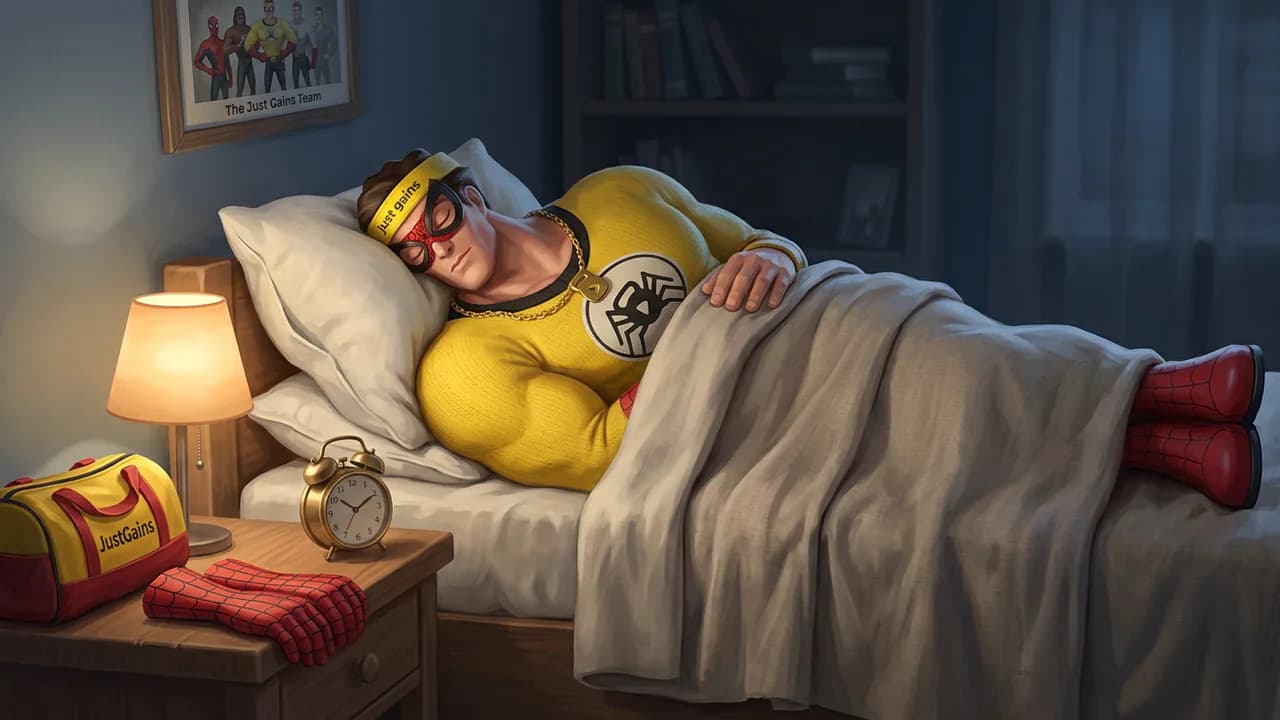
Your workout has a start time, a list of exercises, and perhaps a playlist called something alarming. Bedtime gets whatever minutes survive the dishwasher and one more video. In our illustration, Hugh G. Mass has already reached the duvet phase of his training plan. His gym bag can wait until morning.
Give sleep an actual slot
For adults aged 18 to 60, CDC recommends at least seven hours of sleep per day. Its guidance is seven to nine hours at ages 61 to 64, and seven to eight hours from age 65 onward. Check the CDC age-based recommendations.
For sport, the 2021 athlete sleep consensus favors an individual approach that considers perceived sleep needs. That guidance concerns athletes; it cannot tell us exactly how much sleep a particular recreational lifter needs. Treat the general recommendations as a starting point for making room in your schedule.
Start with the part you can influence. Perhaps that is finishing tomorrow's gym packing before you sit down. Perhaps it is asking someone to cover an early childcare shift. If your shifts rotate or a baby currently runs the household, work with the opening you have. Nobody needs a bedtime guilt spreadsheet.
Read the research without panicking
A 2022 review by Craven and colleagues examined 69 publications on acute sleep loss, including restriction to six hours or less and complete deprivation. Exercise performance generally declined, but results varied substantially across experiments. Participants were overwhelmingly male, and the review excluded shift workers and repeated nights of restriction.
Those boundaries matter. An experiment involving a whole night awake cannot predict your squat after going to bed a little late. The athlete consensus also distinguished total deprivation from the less clear evidence on one to three nights of partial restriction. A short night gives you context for tomorrow. It does not hand you a precise strength forecast.
Make the evening boring on purpose
CDC suggests consistent sleep and wake times, a quiet, cool bedroom, and turning off electronic devices at least 30 minutes before bed. It also recommends avoiding caffeine in the afternoon or evening. These are general habits that can help sleep, with room to adapt them to your circumstances.
Here is an ordinary example to borrow: pack your bag after dinner, put the charger beyond arm's reach, and choose something quiet for the period before bed. Read a few pages. Take care of the small chores that otherwise become an expedition after you brush your teeth. The exact sequence is yours to arrange.
Try one change tonight. If you need your phone nearby for family or work, keep it nearby and close the app that tends to eat the evening. If you work nights, build your routine around the sleep opportunity your schedule allows. The imaginary bedtime referee can take the night off.
Give tomorrow's workout an edit button
Suppose you planned to add weight after an interrupted night. Here is a conservative example you can adapt: begin with your usual warm-up and assess how the movement feels. If it feels unusually difficult, keep the previous load or do fewer work sets. Save the big attempt for another day. This is a practical judgment call, with no universal sleep-hour cutoff for changing a session.
Reschedule if you are too sleepy to train or travel safely. If sleep problems keep recurring, or you feel tired despite getting enough sleep, CDC advises talking with a healthcare provider. You deserve help with that, even if your gym playlist insists you should simply try harder.
Keep a record of the workout you did
When you adjust a session, record the actual weights and reps. Looking back at several workouts gives you something concrete to compare with today. A lighter session belongs in that record, too. Resist rewriting it into the workout you intended to do while standing beside the rack.
JustGains lets you log your sets and review workout history, so your next session can start with a clear record of the last one. Install JustGains for iPhone or Android, then log what actually happened. Hugh can handle the illustration's sleeping duties; you can put your phone down.
Sources
Figures were read from each source on Oct 7, 2026. The people and projects featured did not review or endorse this article.
Keep reading
Training · · 5 min read
The 20-minute workout for days that ate your calendar
A practical short strength session with a warm-up, six sensible sets, and actual rest. For the days when your calendar has other plans.
Getting started · · 4 min read
Your first gym session has a tutorial level
A friendly first-gym-day plan for learning the room, trying a few movements, and handling the small etiquette questions nobody puts on the membership form.

Nutrition · · 4 min read
Protein without turning dinner into homework
Everyday meal ideas, plant options, and useful shortcuts for getting protein onto your plate without eating the same dinner forever.
Progress & activity · · 4 min read
The tiny plate appreciation society
A small plate, one extra controlled rep, and a workout history worth checking. Give the less dramatic gym wins their moment.
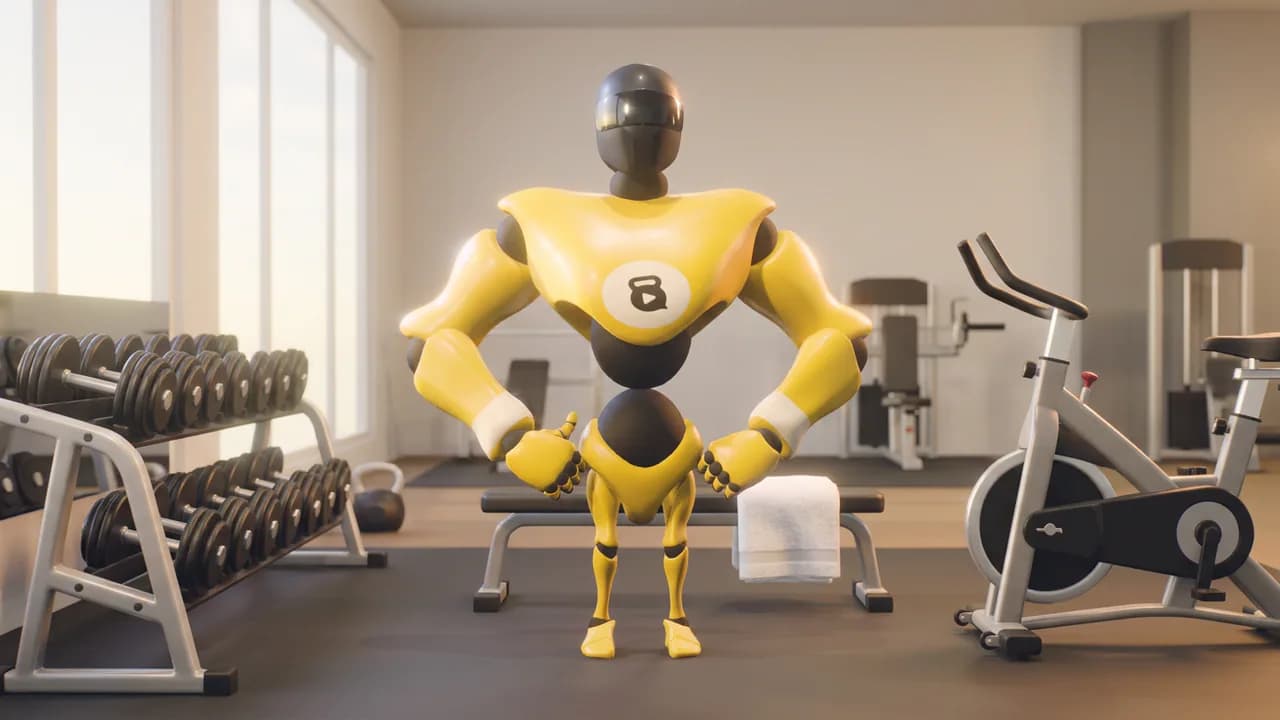
Training · · 4 min read
Your dumbbells and running shoes can be friends
How to make room for enjoyable cardio alongside lifting, with a flexible example week and an honest look at the interference research.

Progress & activity · · 4 min read
Turn your walk into a side quest
A favorite tree, a coffee loop, a very important duck inspection. Give your next walk a small purpose without making 10,000 steps the admission price.

Nutrition · · 4 min read
Creatine is allowed to be boring
A calm guide to what creatine can help with, why plain monohydrate is enough, and how to keep the supplement from becoming the main character.
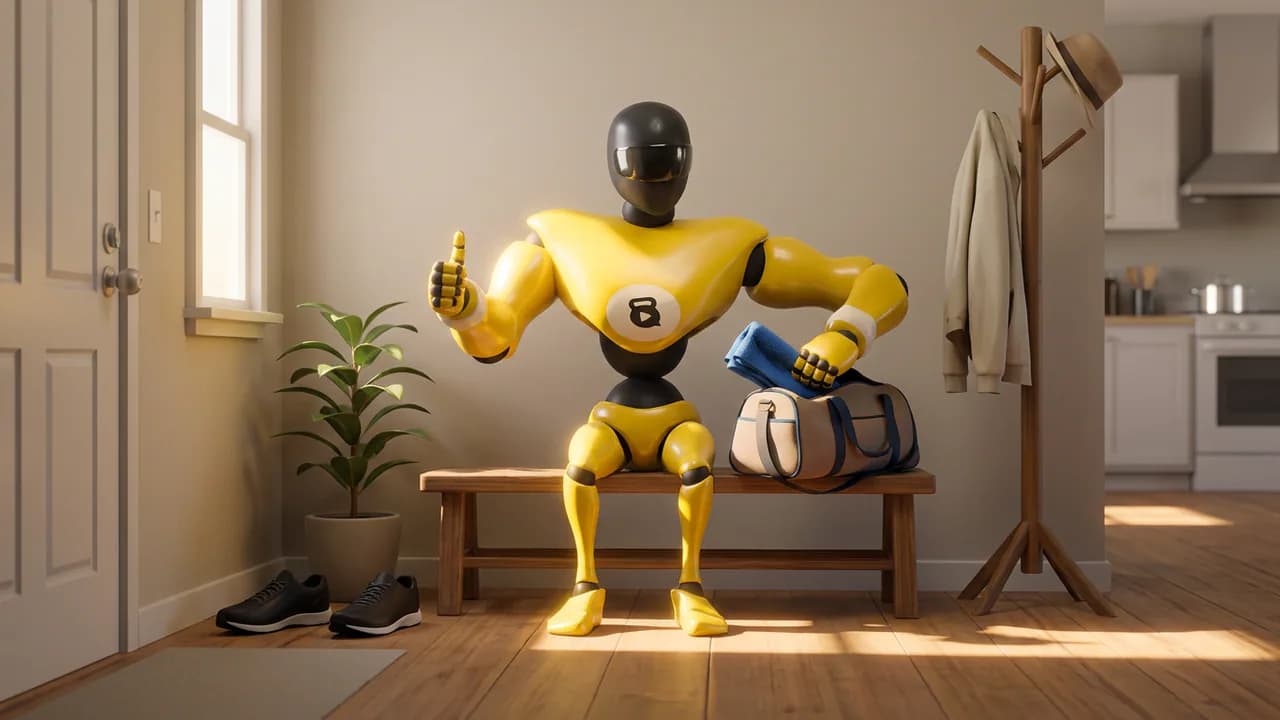
Training · · 4 min read
Missed a week? The gym has not filed a missing-person report
A practical return after an ordinary missed training week, with a manageable first session, room to adjust, and absolutely no apology burpees.
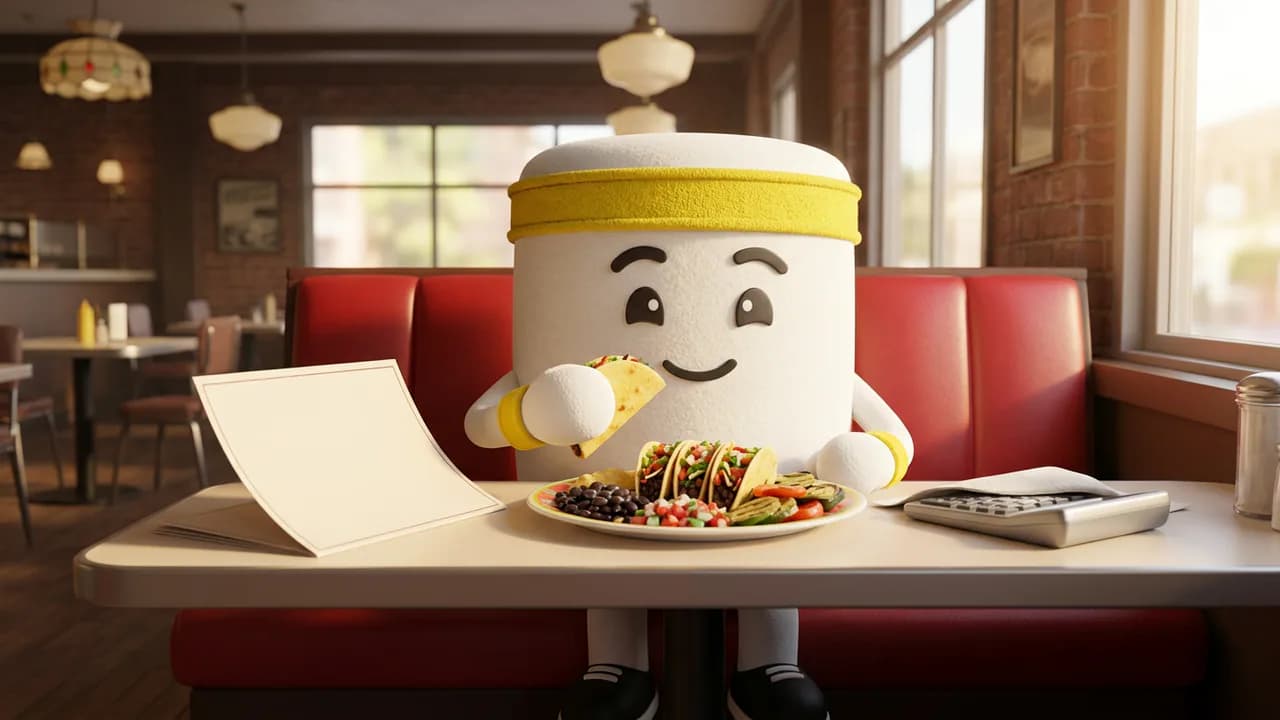
Nutrition · · 4 min read
The menu is not a math exam
Enjoy dinner out, use restaurant nutrition information when it helps, and make peace with an estimate if you choose to log your meal.
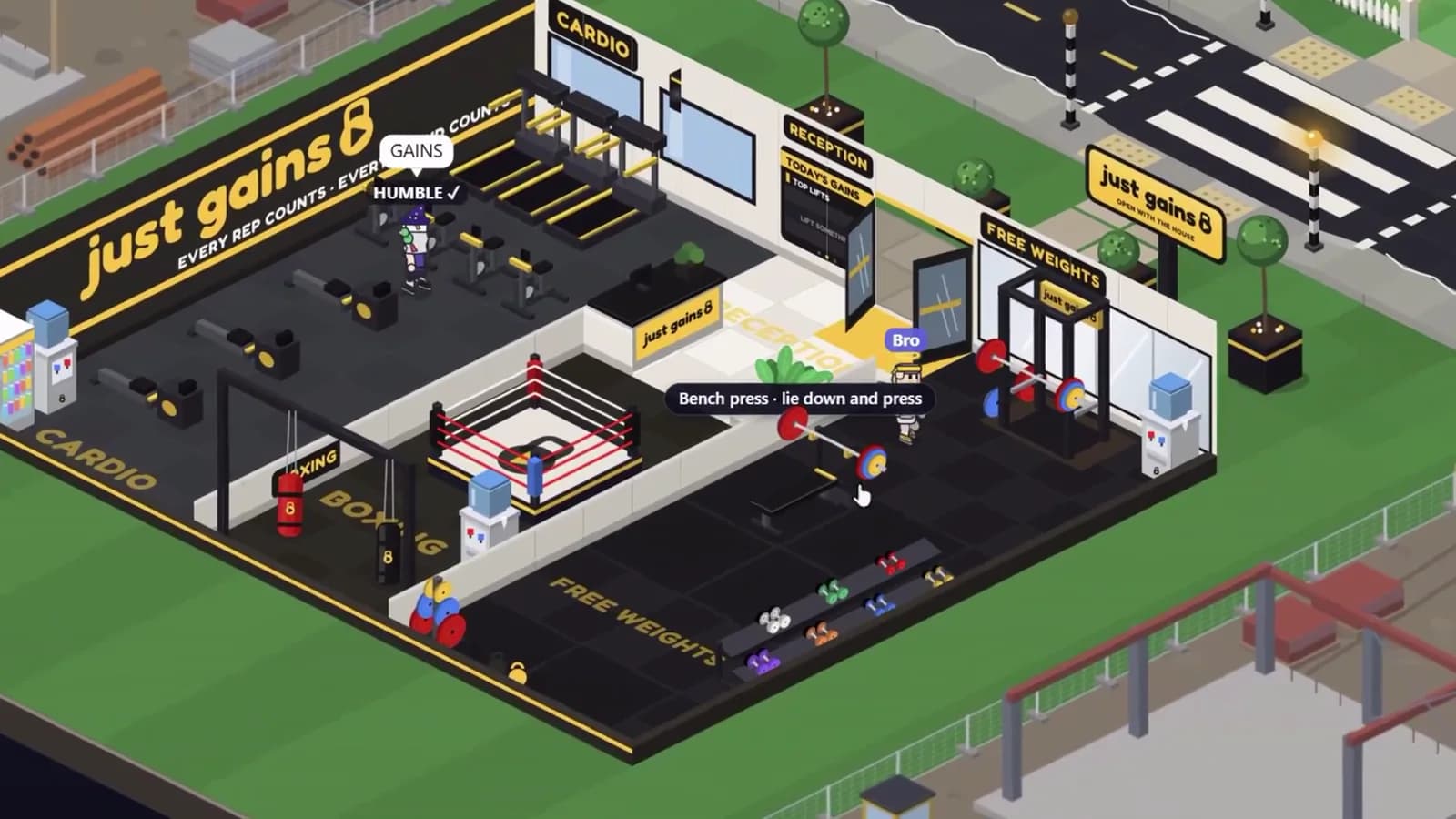
Inside JustGains · · 3 min read
There’s a JustGains gym in a browser game now. Train there and you get bigger.
Phil Campbell’s Blade House is a browser world for creator Max Blade. Across the street he put a JustGains gym with a bench press minigame, rowers and a size buff.
Training · · 3 min read
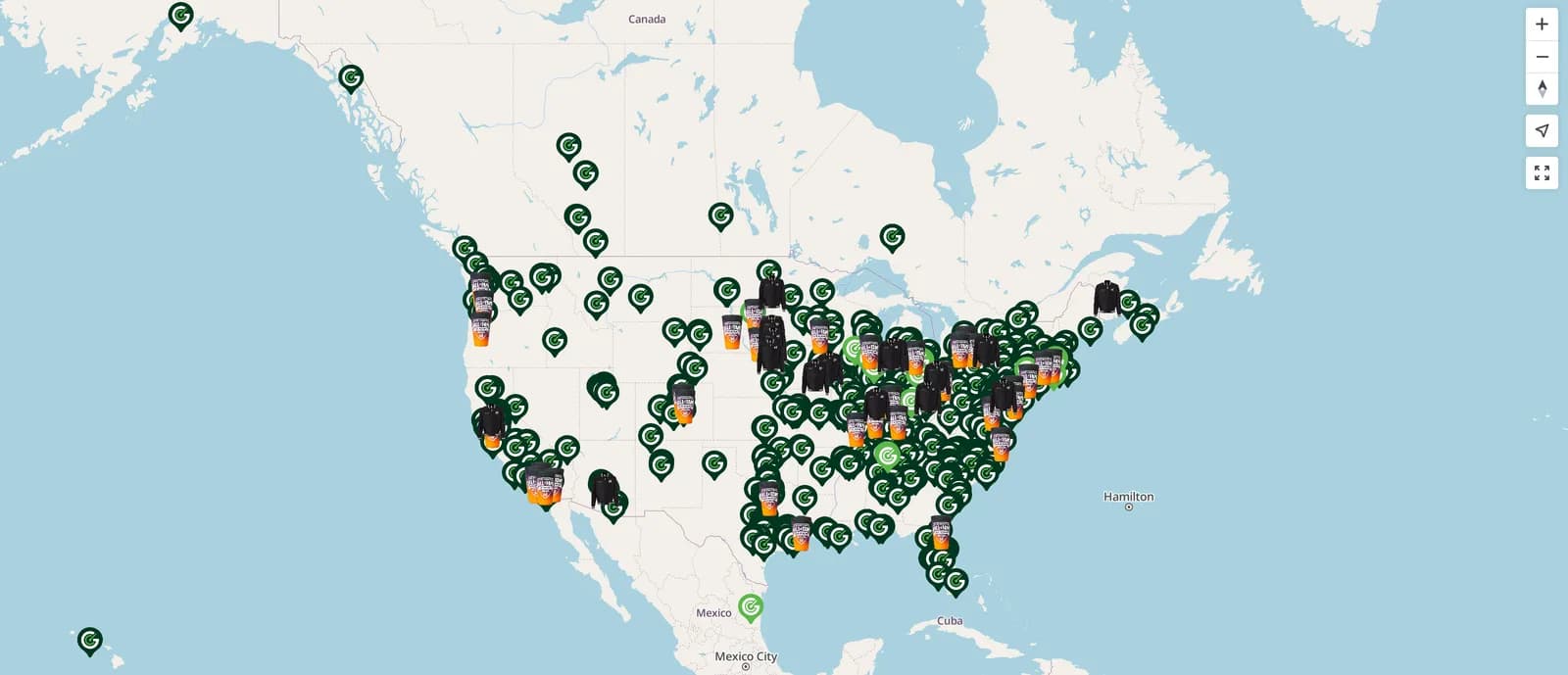
There’s a website for mapping home gyms. Who knew?
Gym Radar maps and catalogs more than 2,200 home gyms. Then Wes Bos used Claude to build a 3D gym builder that recreates them piece by piece.
Training · · 3 min read
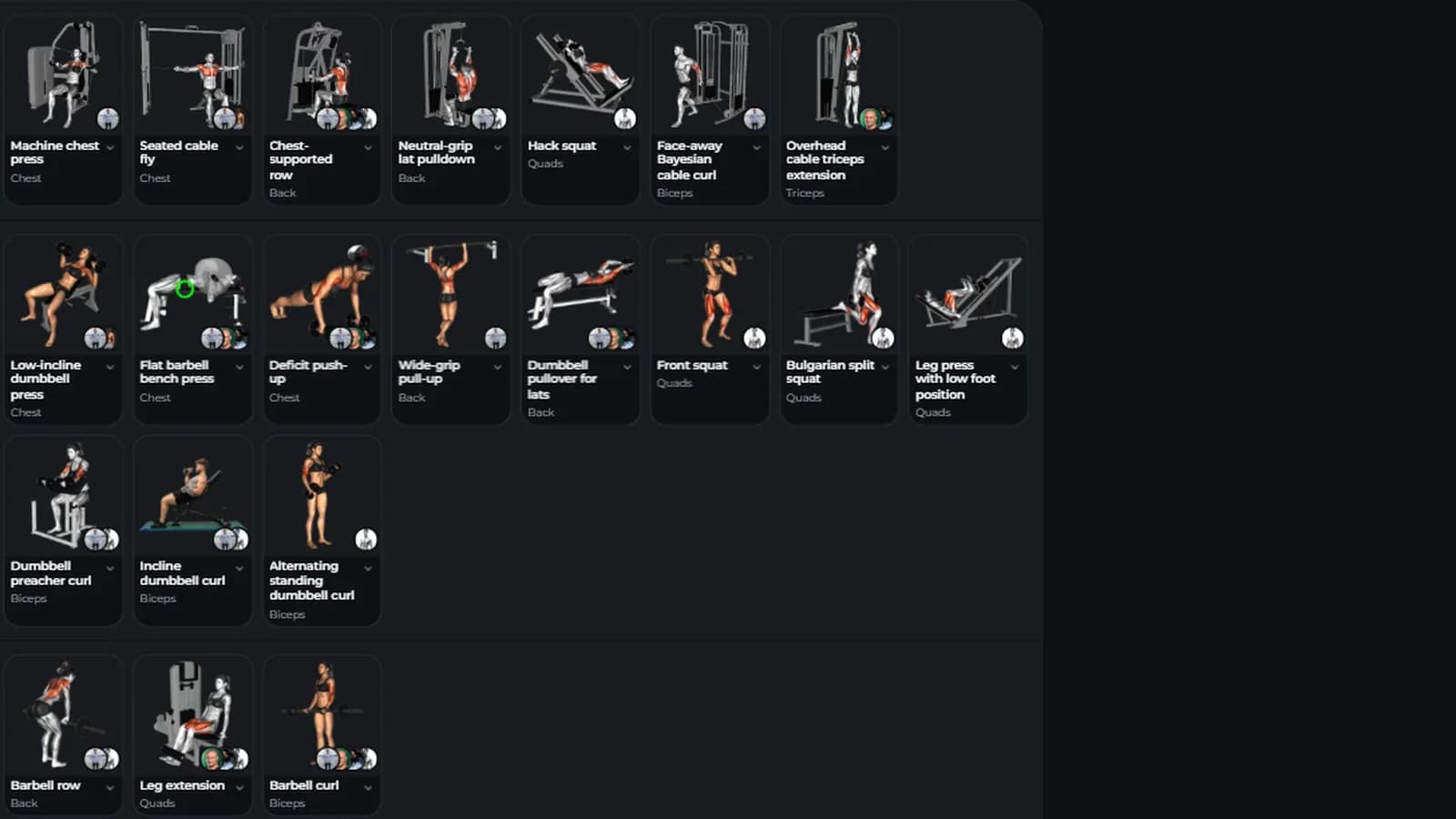
Exercise tier lists: what deserves your time?
We compare Jeff Nippard, Mike Israetel with Milo Wolf, ATHLEAN-X, and Jeremy Ethier to build a practical muscle-growth tier chart, with their disagreements intact.
Recovery · · 5 min read
How long do muscles take to recover?
The 48 to 72 hour rule is a useful starting point, but real recovery depends on context.
Training · · 5 min read
What is RPE?
RPE is a 1 to 10 effort scale for logging how hard a set actually felt.
Training · · 5 min read
What is a deload?
A deload is a planned easier stretch of training that lets fatigue drop while you keep going.