Training · · 4 min read
Your dumbbells and running shoes can be friends
You can enjoy the weights room and the bike ride home. Here is how to give both a place in your week, with enough breathing room to actually enjoy them.

Written by
JustGains

Imagine finishing a good lifting session, spotting the bike, and wondering whether ten minutes on it will somehow cancel your squats. Gym folklore has given this perfectly ordinary piece of equipment an impressive criminal record. Before sentencing it to life as a towel rack, consider what the research actually measured.
The treadmill has an alibi
Moritz Schumann and colleagues pooled 43 studies of healthy adults. Compared with the same strength training alone, adding aerobic training produced no statistically significant average difference in muscle growth or maximum strength gains. That is encouraging for recreational lifters, with a qualification: the findings cover the programs studied, not every possible training dose. Read the concurrent-training review.
Explosive strength, such as producing force quickly in a jump, was a different story. Gains were smaller with combined training, particularly when both happened in one session. The review also could not properly compare aerobic intensities because reporting was inconsistent. A relaxed ride and a punishing interval session therefore deserve separate planning decisions. See the results and limitations.
Give your priority the good appointment
If getting stronger is your priority and both activities must share a session, lifting first is a reasonable default. Lee Eddens and colleagues reviewed ten studies in healthy adults and found better improvements in lower-body dynamic strength when resistance exercise came first. They found no clear order advantage for muscle growth or aerobic capacity. Read the exercise-order review.
Experienced lifters chasing maximum strength may need more separation. A separate review by Henrik Petré and colleagues found reduced lower-body strength gains in trained participants, especially with same-session training. Its findings differed from the broader review, so a blanket promise of zero interference would oversell the evidence. Read the training-status review.
For your calendar, pick the session you most want to do well and give it a realistic slot. If a race is the current project, protect time for that training. If lifting is the project, avoid casually attaching your hardest cardio session to every leg day. Your calendar can have a favorite without declaring a permanent winner.
Find cardio you would voluntarily repeat
The health guidelines already make room for both: adults should get at least 150 minutes of moderate aerobic activity or 75 minutes of vigorous activity each week, or an equivalent mix, plus muscle-strengthening activity on at least two days covering all major muscle groups. Smaller chunks count, and doing some activity has benefits even below those targets. See the CDC adult guidelines.
Choose a version with something you like attached: a walk with a friend, a bike ride to somewhere pleasant, or a stationary bike beside your favorite ridiculous television show. For moderate effort, the CDC suggests a talk test: conversation is possible, singing is difficult. Your neighbors may welcome this limit. Check the intensity guide.
A week with room to breathe
Here is an editorial example for someone who already lifts comfortably three days a week and wants to add cardio. It illustrates spacing; it is not a tested protocol or a complete prescription. Keep your existing lifting plan on Monday, Wednesday, and Friday. Try a manageable bike ride on Tuesday and an enjoyable walk or jog on Saturday. Leave Thursday and Sunday flexible for rest or comfortable movement.
Start with durations that fit your current fitness. Those two cardio slots may cover only part of the weekly aerobic target; shorter brisk walks can contribute too. Build toward the guideline gradually if you are starting below it. CDC guidance explicitly allows activity to be spread across the week. See how the weekly recommendation works.
Keep a few receipts
Try that calendar, then look back: were the lifting sessions manageable? Did you enjoy the cardio enough to repeat it? If the combination repeatedly leaves you too tired for your planned sessions, try less cardio time or more space between demanding workouts. Treat that as an adjustment to your example week, and change one thing so you can judge whether it helped.
JustGains lets you log your lifting sets and reps and record activities, so your week has receipts beyond a vague memory of being sweaty. Log your next workout, then record a walk or run you actually enjoyed. Install JustGains for iPhone or Android.
Sources
Figures were read from each source on Oct 7, 2026. The people and projects featured did not review or endorse this article.
Keep reading
Training · · 5 min read
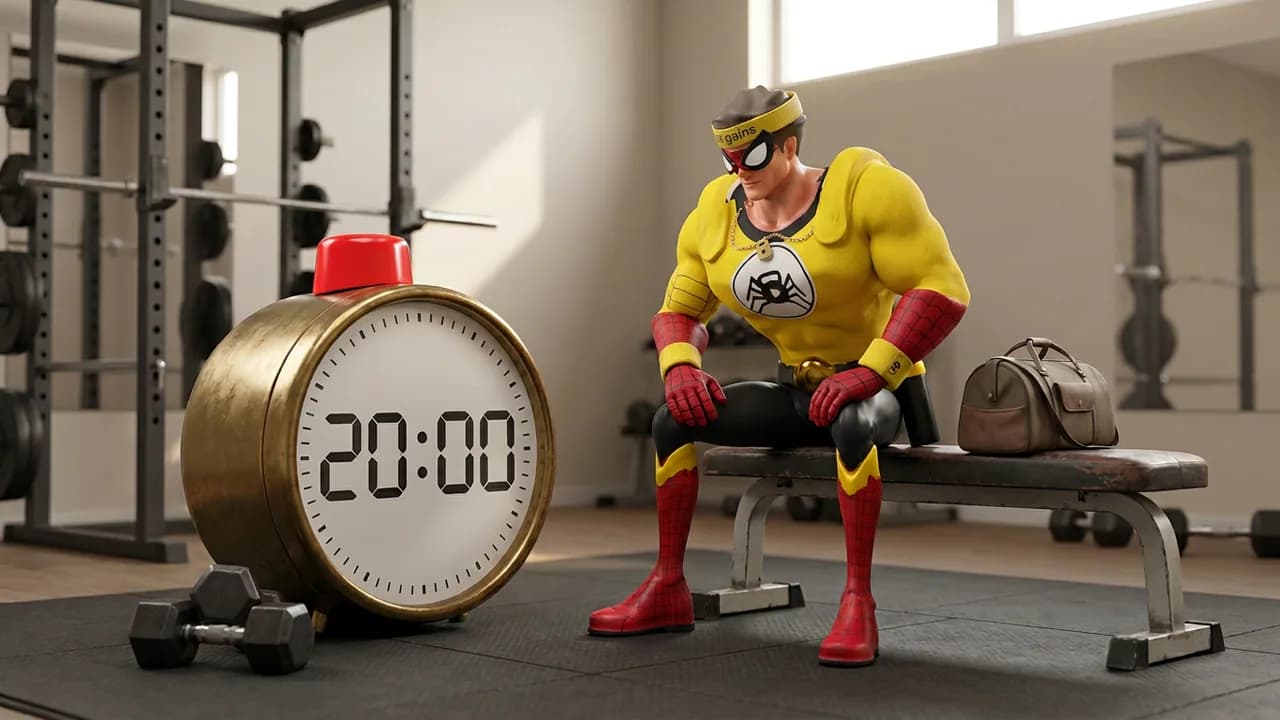
The 20-minute workout for days that ate your calendar
A practical short strength session with a warm-up, six sensible sets, and actual rest. For the days when your calendar has other plans.

Getting started · · 4 min read
Your first gym session has a tutorial level
A friendly first-gym-day plan for learning the room, trying a few movements, and handling the small etiquette questions nobody puts on the membership form.

Nutrition · · 4 min read
Protein without turning dinner into homework
Everyday meal ideas, plant options, and useful shortcuts for getting protein onto your plate without eating the same dinner forever.

Progress & activity · · 4 min read
The tiny plate appreciation society
A small plate, one extra controlled rep, and a workout history worth checking. Give the less dramatic gym wins their moment.

Progress & activity · · 4 min read
Turn your walk into a side quest
A favorite tree, a coffee loop, a very important duck inspection. Give your next walk a small purpose without making 10,000 steps the admission price.

Nutrition · · 4 min read
Creatine is allowed to be boring
A calm guide to what creatine can help with, why plain monohydrate is enough, and how to keep the supplement from becoming the main character.

Recovery · · 4 min read
Your training plan needs a bedtime
A realistic evening routine for people who lift, plus a sensible plan for the workout after a bad night. Hugh G. Mass demonstrates the duvet phase.

Training · · 4 min read
Missed a week? The gym has not filed a missing-person report
A practical return after an ordinary missed training week, with a manageable first session, room to adjust, and absolutely no apology burpees.

Nutrition · · 4 min read
The menu is not a math exam
Enjoy dinner out, use restaurant nutrition information when it helps, and make peace with an estimate if you choose to log your meal.

Inside JustGains · · 3 min read
There’s a JustGains gym in a browser game now. Train there and you get bigger.
Phil Campbell’s Blade House is a browser world for creator Max Blade. Across the street he put a JustGains gym with a bench press minigame, rowers and a size buff.

Training · · 3 min read
There’s a website for mapping home gyms. Who knew?
Gym Radar maps and catalogs more than 2,200 home gyms. Then Wes Bos used Claude to build a 3D gym builder that recreates them piece by piece.
Training · · 3 min read
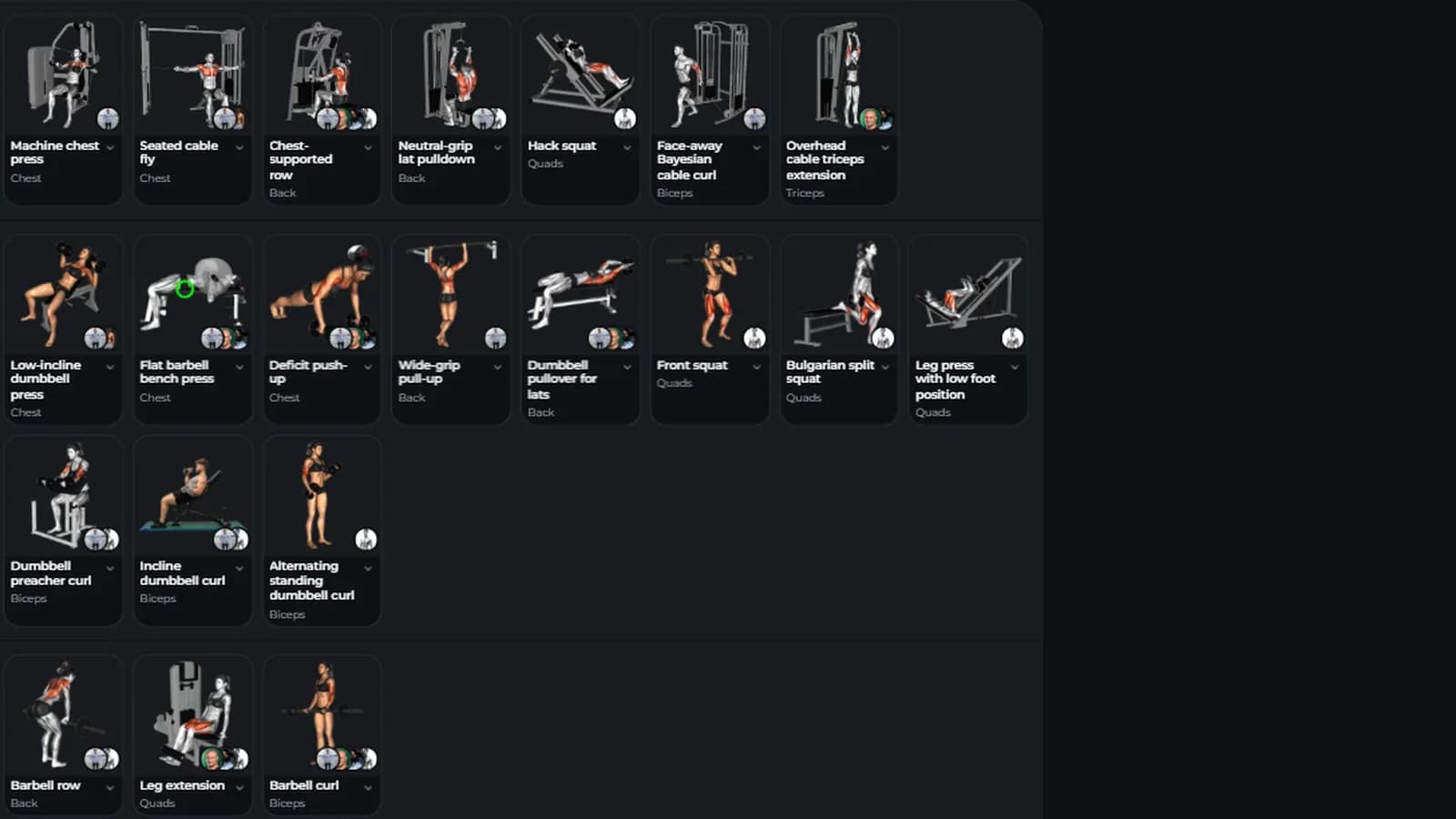
Exercise tier lists: what deserves your time?
We compare Jeff Nippard, Mike Israetel with Milo Wolf, ATHLEAN-X, and Jeremy Ethier to build a practical muscle-growth tier chart, with their disagreements intact.
Training · · 5 min read
What is progressive overload?
Progressive overload means asking a little more of your body over time.
Recovery · · 5 min read
How long do muscles take to recover?
The 48 to 72 hour rule is a useful starting point, but real recovery depends on context.