Training · · 4 min read
Missed a week? The gym has not filed a missing-person report
Your gym bag has spent a week doing an excellent impression of furniture. Here is a sensible way to pick it up again.

Written by
JustGains

You missed Monday, then Wednesday disappeared into a deadline, and somehow it is the following Monday. Now the first workout back has acquired a dramatic soundtrack. You are considering a brand-new program and possibly a personality transplant. Start with finding your shoes. That is a more useful opening scene.
This is for an ordinary missed week when you otherwise feel well. A prolonged layoff, ongoing illness, or injury calls for a return suited to that situation; follow any medical or rehabilitation advice you have. A calendar gap alone cannot tell you which workout is appropriate.
Give the gap a boring explanation
Write down what actually got in the way. Perhaps your usual evening slot became impossible, or the gym was a detour you could not manage. Keep the explanation practical. “Tuesday childcare changed” gives you something to plan around. A sweeping verdict about your character gives you very little to put in a calendar.
The NIDDK’s guidance on changing habits treats setbacks as an expected part of the process and recommends planning around roadblocks. Try one adjustment: move the session to a realistic opening, or have a shorter version ready. Your schedule is allowed to acknowledge the existence of your life.
The research has a longer calendar
In a 2024 trial by Halonen and colleagues, initially untrained, healthy adults followed supervised resistance training. One group took a ten-week break between training blocks; another trained continuously for twenty weeks. Strength and muscle size declined during the break and recovered during retraining, with similar improvements between groups at the end.
That is encouraging evidence about returning to training. Its ten-week interruption and beginner participants cannot tell a regular lifter exactly what happened during seven busy days. We cannot use it to calculate your losses or promise a recovery deadline. You also do not need that calculation to choose a sensible next session.
Write the next workout before you leave
Pick the next session in your usual routine and give it a realistic finish time. Leave last week’s unfinished workouts on last week’s calendar. Trying to squeeze all of them into one visit turns a simple return into an administrative problem with dumbbells. If you follow a coached program, agree on where to resume with your coach.
For an illustrative shorter session, choose familiar movements: a leg press and chest press, followed by a seated row. Use alternatives you already know if those are outside your routine. After warming up, begin with a manageable set of each in a familiar rep range. Decide whether another set fits your comfort and available time. This example is something to adapt, with no requirement to copy the exercises or set count.
Let the warm-up have a vote
Begin with easy movement, then rehearse your chosen lifts with lighter loads. The American Heart Association’s exercise guidance recommends warming up at an easier pace and building activity gradually. For this return session, choose working loads that let you finish with several controlled repetitions still available. Give yourself permission to adjust after the warm-up.
If the work feels unexpectedly difficult, lower the load or finish sooner. If it feels comfortable, continue the session you planned. There is no universal percentage everyone must remove after a missed week, and today needs no personal-record audition. Stop if you develop pain; chest pain, unusual breathlessness, or lightheadedness warrants stopping and medical attention, as the AHA advises.
Leave with a next time
Before you leave, choose the next realistic opportunity to train. Put the bag where you will actually see it. If your shorter session worked, keep it available for the next crowded week. You can return to your usual workload as it feels appropriate, without inventing extra sessions to settle a debt with the squat rack.
Record the workout you actually completed in JustGains, including the weights and reps you used, so your workout history has a useful starting point for next time. Install JustGains for iPhone or Android, log your manageable return session, and put the towel in the wash.
Sources
Figures were read from each source on Oct 7, 2026. The people and projects featured did not review or endorse this article.
Keep reading
Training · · 5 min read
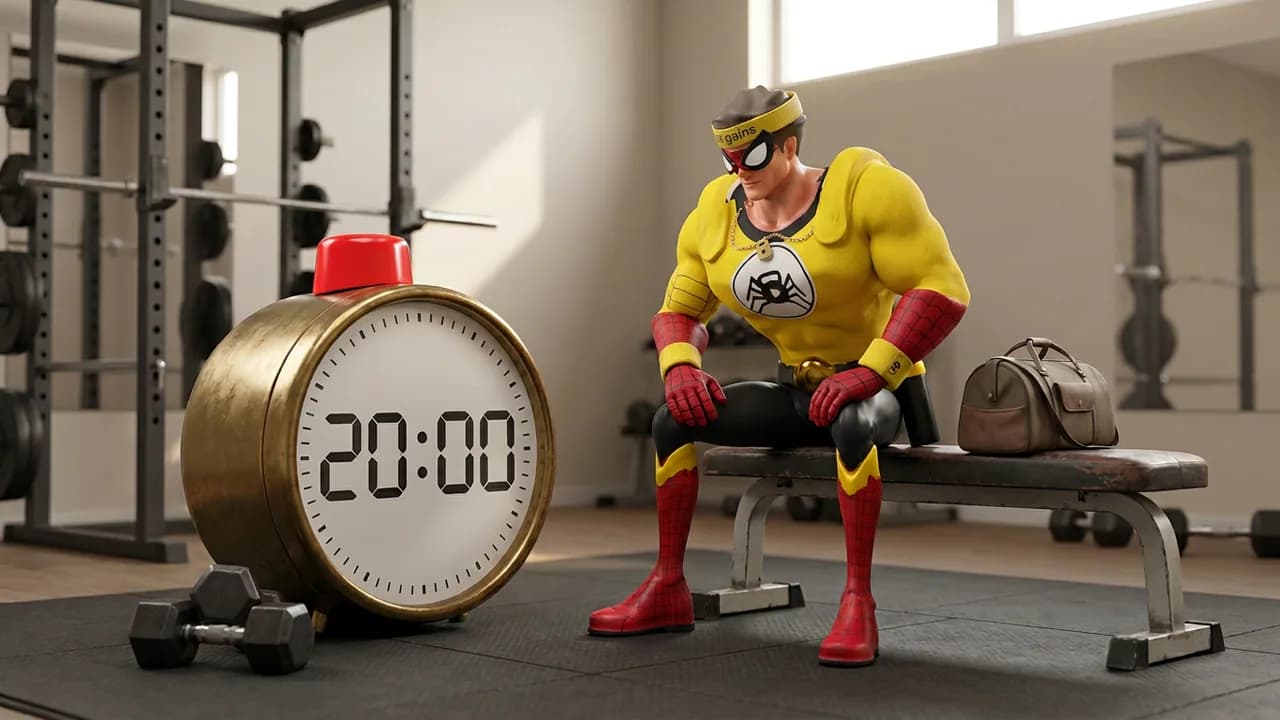
The 20-minute workout for days that ate your calendar
A practical short strength session with a warm-up, six sensible sets, and actual rest. For the days when your calendar has other plans.

Getting started · · 4 min read
Your first gym session has a tutorial level
A friendly first-gym-day plan for learning the room, trying a few movements, and handling the small etiquette questions nobody puts on the membership form.

Nutrition · · 4 min read
Protein without turning dinner into homework
Everyday meal ideas, plant options, and useful shortcuts for getting protein onto your plate without eating the same dinner forever.

Progress & activity · · 4 min read
The tiny plate appreciation society
A small plate, one extra controlled rep, and a workout history worth checking. Give the less dramatic gym wins their moment.

Training · · 4 min read
Your dumbbells and running shoes can be friends
How to make room for enjoyable cardio alongside lifting, with a flexible example week and an honest look at the interference research.

Progress & activity · · 4 min read
Turn your walk into a side quest
A favorite tree, a coffee loop, a very important duck inspection. Give your next walk a small purpose without making 10,000 steps the admission price.

Nutrition · · 4 min read
Creatine is allowed to be boring
A calm guide to what creatine can help with, why plain monohydrate is enough, and how to keep the supplement from becoming the main character.

Recovery · · 4 min read
Your training plan needs a bedtime
A realistic evening routine for people who lift, plus a sensible plan for the workout after a bad night. Hugh G. Mass demonstrates the duvet phase.

Nutrition · · 4 min read
The menu is not a math exam
Enjoy dinner out, use restaurant nutrition information when it helps, and make peace with an estimate if you choose to log your meal.

Inside JustGains · · 3 min read
There’s a JustGains gym in a browser game now. Train there and you get bigger.
Phil Campbell’s Blade House is a browser world for creator Max Blade. Across the street he put a JustGains gym with a bench press minigame, rowers and a size buff.
Training · · 3 min read
There’s a website for mapping home gyms. Who knew?
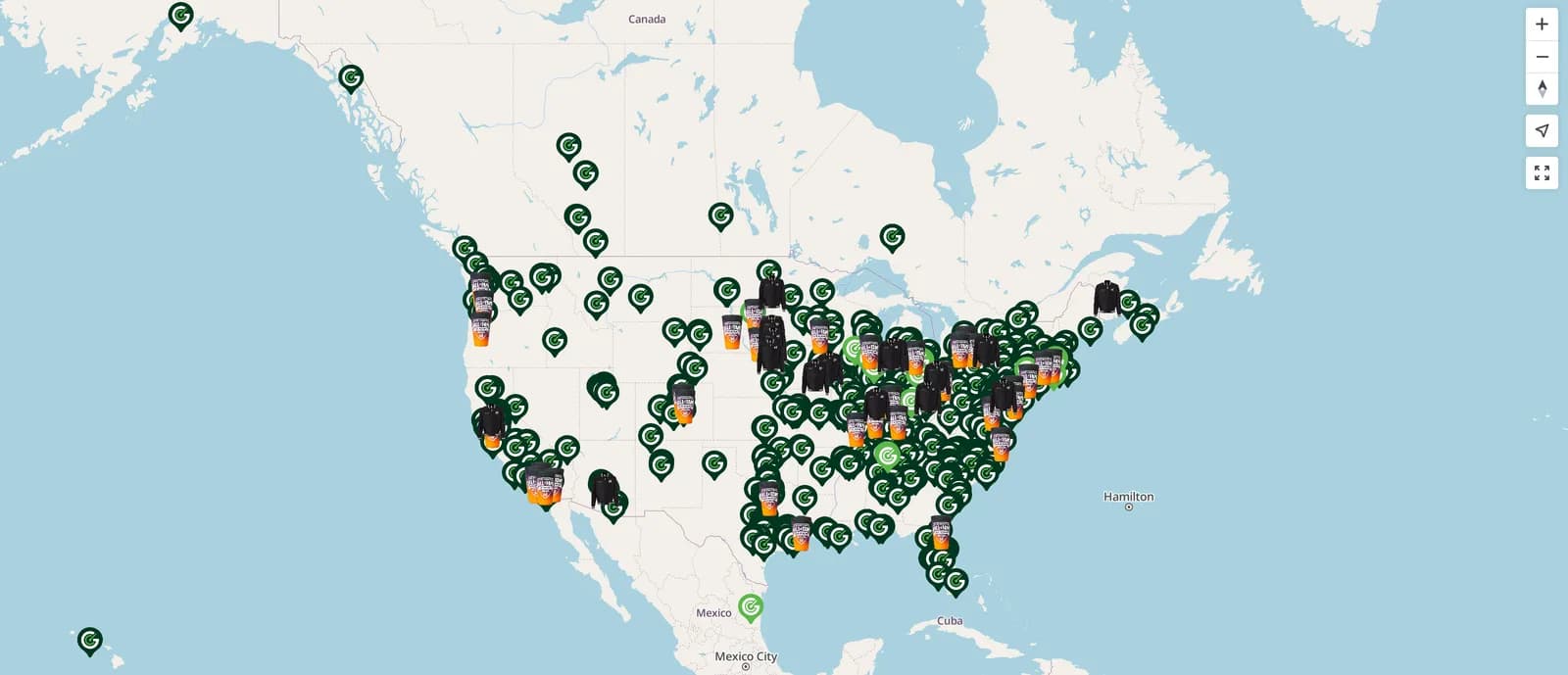
Gym Radar maps and catalogs more than 2,200 home gyms. Then Wes Bos used Claude to build a 3D gym builder that recreates them piece by piece.
Training · · 3 min read
Exercise tier lists: what deserves your time?
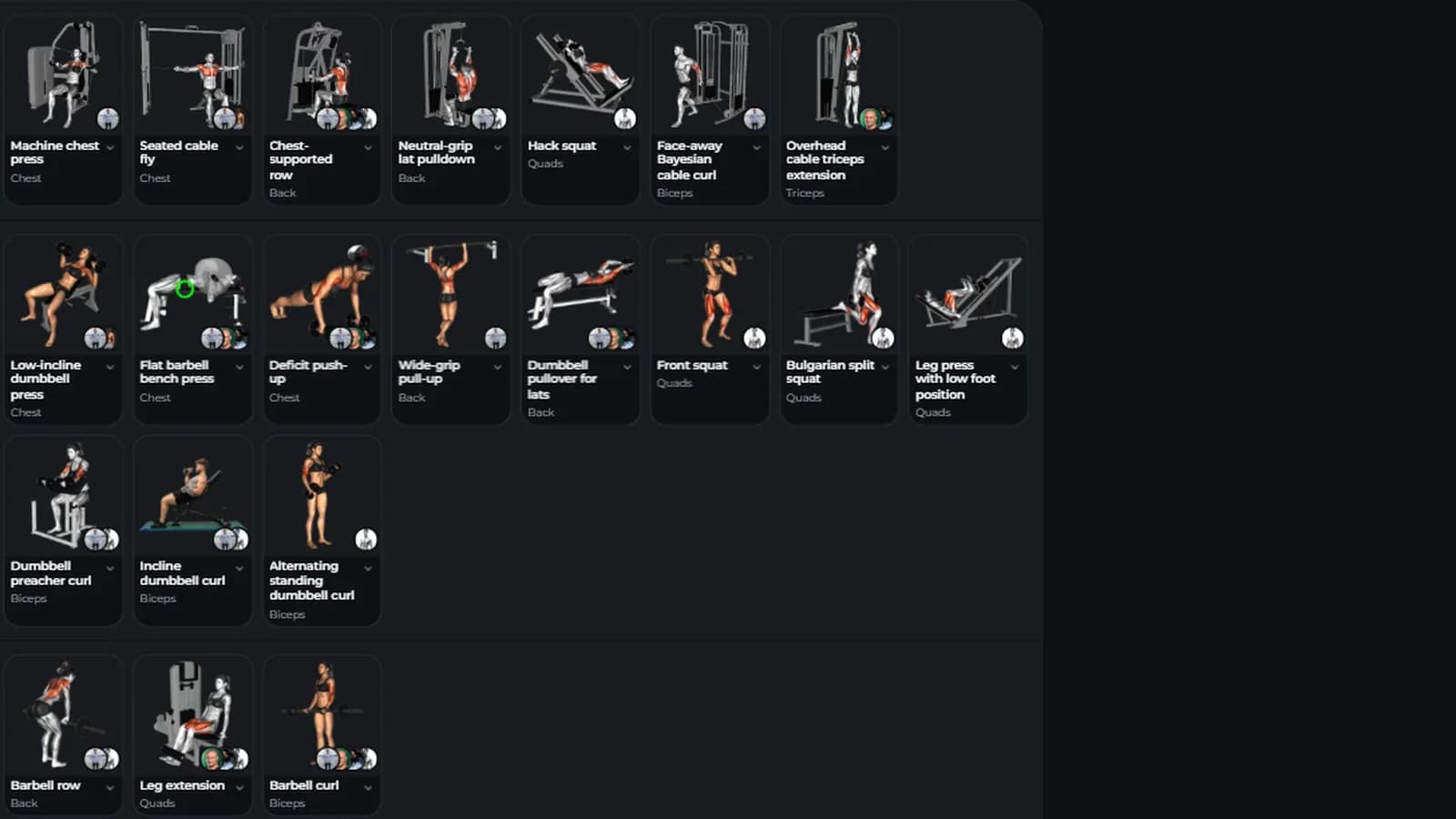
We compare Jeff Nippard, Mike Israetel with Milo Wolf, ATHLEAN-X, and Jeremy Ethier to build a practical muscle-growth tier chart, with their disagreements intact.
Training · · 5 min read
What is RPE?
RPE is a 1 to 10 effort scale for logging how hard a set actually felt.
Training · · 5 min read
What is progressive overload?
Progressive overload means asking a little more of your body over time.
Recovery · · 5 min read
How long do muscles take to recover?
The 48 to 72 hour rule is a useful starting point, but real recovery depends on context.