Side-Bend Stepback
Lengthen & strengthen! Side-Bend Stepback targets obliques and legs for a full-body burn and improved flexibility.
The Side-Bend Stepback mainly works the core, with help from the hip abductors (outer thighs) and back. No equipment needed: it uses just your bodyweight.

Side-Bend Stepback Muscles Worked
Primary
Obliques; Abdominals (rectus abdominis)
Secondary
Hip Abductor (gluteus medius); Lats (latissimus dorsi)
Side-Bend Stepback Variations and Alternatives


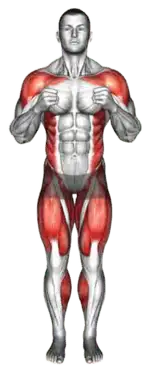
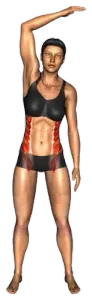

How to do the Side-Bend Stepback
Start by standing with your feet shoulder-width apart.
Raise one arm overhead, keeping the other arm down at your side.
Step back with the leg on the same side as the raised arm into a reverse lunge position.
Simultaneously, lean your upper body towards the side of the raised arm, engaging your obliques and stretching the side of your torso.
Return to the standing position by stepping the back foot forward and bringing your body upright while lowering your arm.
Repeat the movement for the desired number of repetitions before switching sides.
The two side images appear to demonstrate the side bending component, engaging the obliques, while the front-facing images seem to imply the neutral starting point and the stepback motion, respectively.
---
Side-Bend Stepback FAQs
What muscles does the Side-Bend Stepback work?
The Side-Bend Stepback mainly works the core, with help from the hip abductors (outer thighs) and back. The main muscles are the obliques and rectus abdominis.
What equipment do you need for the Side-Bend Stepback?
None. The Side-Bend Stepback is a bodyweight exercise, so you can do it anywhere.
What are some Side-Bend Stepback variations and alternatives?
Similar exercises include the Alternating Side-Step Bend, Alternating Side-Bend Side-Step Jump, Side-Step L Pose and Standing Side-Bend Two.
Training calculators
Work out the numbers behind your training before your next session.