Standing Single-Arm Wall Circle
Improve shoulder mobility! Gently increase range of motion with controlled arm circles against a wall. Simple, effective relief.
The Standing Single-Arm Wall Circle mainly works the shoulders and back, with help from the traps. No equipment needed: it uses just your bodyweight.
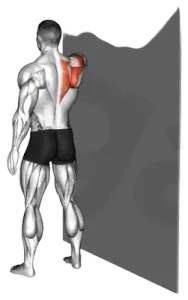

Standing Single-Arm Wall Circle Muscles Worked
Primary
Front Shoulder (anterior deltoid); Lats (latissimus dorsi)
Secondary
Upper Traps (trapezius, upper fibers); Rhomboids (Shoulder Blade) (rhomboids, major & minor)
Standing Single-Arm Wall Circle Variations and Alternatives


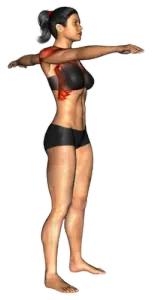

How to do the Standing Single-Arm Wall Circle
Standing Single Arm Circle on a Wall
Starting Position:
Stand side-on to a wall with your feet shoulder-width apart.
Position yourself a few inches away from the wall.
Your feet should be flat on the ground, and your body should be straight.
Arm Positioning:
Extend the arm that is closest to the wall straight out in front of you.
Ensure your shoulder is relaxed and down, away from your ear.
Movement:
Slowly move your extended arm in a circular motion while keeping it straight.
Start with small circles and gradually increase the size of the circle.
Perform the motion for about 30 seconds, focusing on maintaining control and stability.
Breathing:
Breathe steadily throughout the exercise. Inhale through your nose and exhale through your mouth.
Switching Sides:
After completing the set time, lower your arm and switch to the other side, repeating the same movement.
Cool Down:
Finish by gently shaking out your arms and taking a few deep breaths to relax.
Tips:
Keep your core engaged to maintain balance.
Avoid arching your back; keep your torso straight.
If you feel any discomfort or pain, stop the exercise and consult a professional.
Make sure to perform this exercise in a safe environment free from obstacles.
Standing Single-Arm Wall Circle FAQs
What muscles does the Standing Single-Arm Wall Circle work?
The Standing Single-Arm Wall Circle mainly works the shoulders and back, with help from the traps. The main muscles are the anterior deltoid and latissimus dorsi.
What equipment do you need for the Standing Single-Arm Wall Circle?
None. The Standing Single-Arm Wall Circle is a bodyweight exercise, so you can do it anywhere.
What are some Standing Single-Arm Wall Circle variations and alternatives?
Similar exercises include the Alternating Against-Wall Shoulder Flexion, Bodyweight Wall-Supported Standing Around-The-World, Alternating Against-Wall Arm Raise and Alternating Standing Arm Circling.
Training calculators
Work out the numbers behind your training before your next session.