Seated Isometric Hold Pull-Up
Build serious pull-up strength! This seated isometric hold targets key muscles for a stronger back and arms. Challenge yourself!
The Seated Isometric Hold Pull-Up is a compound exercise that mainly works the back and biceps, with help from the traps. You'll need: pull up bar.

Required Equipment

Seated Isometric Hold Pull-Up Muscles Worked
Primary
Lats (latissimus dorsi); Biceps (biceps brachii)
Secondary
Rhomboids (Shoulder Blade) (rhomboids, major & minor); Mid Traps (trapezius, middle fibers)
Seated Isometric Hold Pull-Up Variations and Alternatives


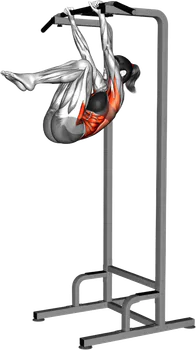

How to do the Seated Isometric Hold Pull-Up
Set Up:
Find a pull-up bar that is at a reachable height for you. Ensure it’s secure and can support your weight.
Starting Position:
Sit directly below the bar with your legs extended in front of you.
Grip the bar with both hands, palms facing away from you (overhand grip) and slightly wider than shoulder-width apart.
Keep your elbows slightly bent and core engaged.
Positioning Your Body:
Lift your feet off the ground, keeping your legs straight or slightly bent at the knees.
Hang from the bar, allowing your body to be fully supported by your arms.
Execution:
Pull your body upwards towards the bar, activating your back and arm muscles.
Hold your position when your chin is above the bar, or hold a position just below the bar if this is too challenging.
Maintain tension in your muscles and avoid swinging or using momentum.
Breathing:
Inhale deeply while preparing to lift and exhale as you pull yourself up.
Hold:
Aim to hold this position for 10-30 seconds, depending on your strength level. Focus on maintaining your form and not relying on momentum.
Lowering:
When ready, slowly lower yourself back down to the starting position, maintaining control.
Repetitions:
Rest briefly and repeat for 3-5 sets, depending on your fitness level.
Safety Tips:
If you're unable to hold the position, consider using a bench or platform to step off between repetitions.
Keep your movements slow and controlled to avoid straining your muscles or joints.
This exercise helps to build strength in the back and arms, making it a great addition to your workout routine.
Seated Isometric Hold Pull-Up FAQs
What muscles does the Seated Isometric Hold Pull-Up work?
The Seated Isometric Hold Pull-Up mainly works the back and biceps, with help from the traps. The main muscles are the latissimus dorsi and biceps brachii.
What equipment do you need for the Seated Isometric Hold Pull-Up?
Pull up bar.
Is the Seated Isometric Hold Pull-Up a compound exercise?
Yes. It's a compound movement, meaning it trains several muscle groups at once rather than isolating one.
What workout day should the Seated Isometric Hold Pull-Up go on?
It belongs on pull day in a push/pull/legs routine.
What are some Seated Isometric Hold Pull-Up variations and alternatives?
Similar exercises include the Assisted Single-Arm Pull-Up, Bench Pull-Up, Corn Cob and Lever Hanging Tucked Front Hold.
Training calculators
Work out the numbers behind your training before your next session.