Forearm Plank
UpdatedBuild core strength with the forearm plank! Hold this static exercise to engage your abs, back, and shoulders. A simple yet effective move!
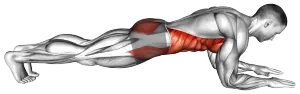
The Forearm Plank mainly works the core, with help from the lower back. No equipment needed: it uses just your bodyweight.

Optional Equipment

Forearm Plank Muscles Worked
Primary
Abdominals (rectus abdominis); Deep Core (transverse abdominis); Obliques
Secondary
Spinal Erectors (erector spinae)
Forearm Plank Variations and Alternatives


How to do the Forearm Plank
Instructions for the Front Elbow Plank:
Start by lying face down on the floor or a mat.
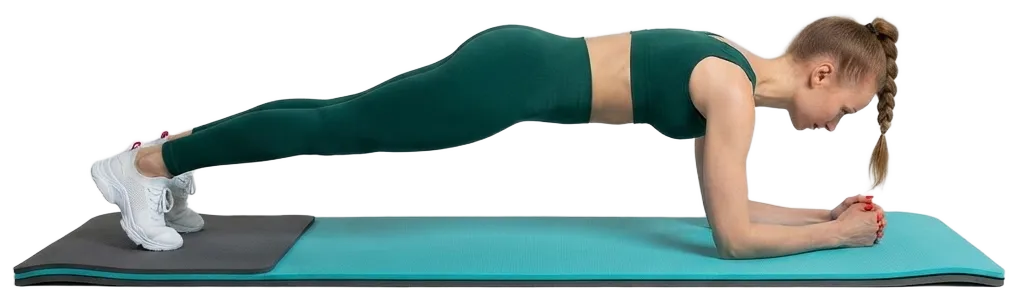
Place your elbows under your shoulders with your forearms and hands flat on the floor. Clasp your hands if it's more comfortable.
Extend your legs straight behind you, keeping your feet hip-width apart.
Engage your core muscles and lift your body off the floor, maintaining a straight line from your head to your heels.
Make sure your elbows are directly under your shoulders to avoid unnecessary shoulder strain.
Keep your back flat and your hips level; avoid letting them sag or piking them up in the air.
Hold this position, keeping your entire body tight, for as long as you can maintain proper form.
To release, lower your body back down onto the mat and relax.
It's important to breathe normally throughout the exercise and to only hold the plank as long as you can maintain proper form. Over time, with practice, you'll be able to hold the position for longer intervals.
---
Forearm Plank FAQs
What muscles does the Forearm Plank work?
The Forearm Plank mainly works the core, with help from the lower back. The main muscles are the rectus abdominis, transverse abdominis and obliques.
What equipment do you need for the Forearm Plank?
None. The Forearm Plank is a bodyweight exercise, so you can do it anywhere.
What are some Forearm Plank variations and alternatives?
Similar exercises include the Back Step Plank, Quadruped Hold Plank, Saw Plank and Bodyweight Triceps Extension from Plank Position.
Training calculators
Work out the numbers behind your training before your next session.