March Twist
March Twist: Cardio with a core twist! Boost your heart rate and engage your obliques. A fun, full-body workout improving coordination and torching calories.
The March Twist mainly works the core, with help from the glutes & hips and back. No equipment needed: it uses just your bodyweight.
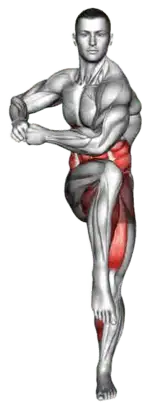

March Twist Muscles Worked
Primary
Obliques; Abdominals (rectus abdominis)
Secondary
Long Thigh (sartorius); Boxer Muscle (serratus anterior); Deep Core (transverse abdominis)
March Twist Variations and Alternatives


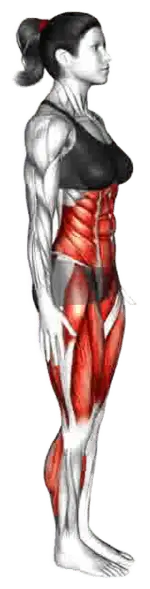


How to do the March Twist
Stand upright with your feet shoulder-width apart and your arms by your sides.
Begin marching in place, lifting your knees alternately to waist height.
As you raise each knee, twist your torso toward the raised knee in a controlled manner.
Simultaneously, bring the opposite elbow toward the raised knee to meet in the middle, engaging your core and particularly your obliques.
Return to the starting position and repeat the motion with the other leg, continuing to alternate legs and twisting your torso with each march.
Keep your movements smooth and rhythmic, focusing on the twist in your torso with each march.
Continue the twist march for the desired duration or number of repetitions, maintaining proper form throughout the exercise.
Remember to keep your back straight and engage your core muscles to support your spine during the exercise. This cardio movement not only raises your heart rate but also helps to improve coordination and flexibility in your torso.
---
March Twist FAQs
What muscles does the March Twist work?
The March Twist mainly works the core, with help from the glutes & hips and back. The main muscles are the obliques and rectus abdominis.
What equipment do you need for the March Twist?
None. The March Twist is a bodyweight exercise, so you can do it anywhere.
What are some March Twist variations and alternatives?
Similar exercises include the High-Knee Twist, Palm & Knee March, Majorette Twist and March-In-Place Bicep Curl.
Training calculators
Work out the numbers behind your training before your next session.