Swimming
Mimic the crawl stroke on land! Build core strength and improve swimming technique. A great low-impact workout.
The Swimming is a compound exercise that mainly works the back, triceps, chest and shoulders, with help from the core and quads. No equipment needed: it uses just your bodyweight.
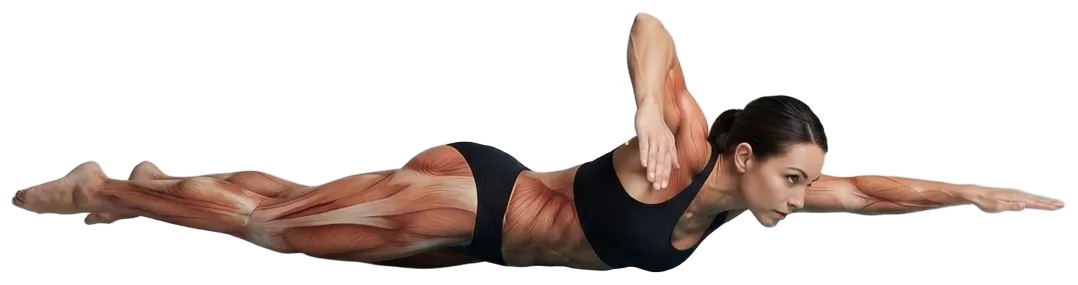
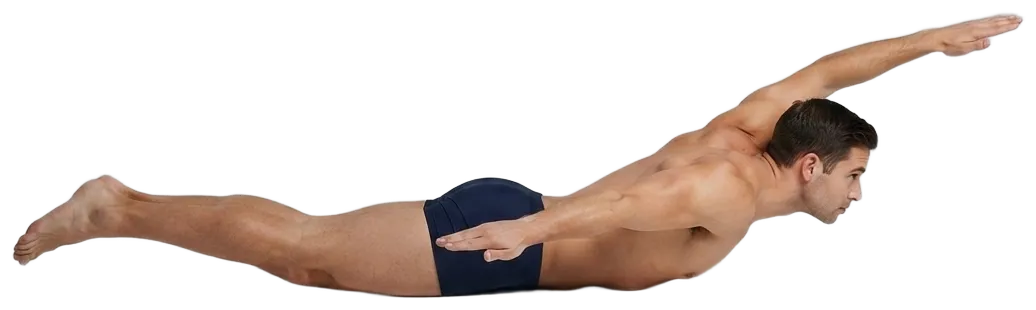

Swimming Muscles Worked
Primary
Lats (latissimus dorsi); Triceps (triceps brachii); Chest (pectoralis major, sternal head); Front Shoulder (anterior deltoid)
Secondary
Abdominals (rectus abdominis); Quads (quadriceps femoris)
Swimming Variations and Alternatives
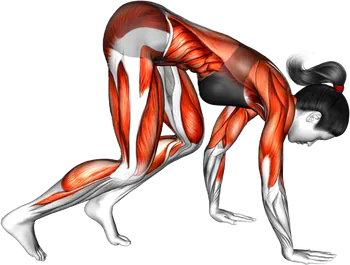


How to do the Swimming
Setup
Begin by lying face down in the water with your body in a straight, horizontal position.
Movement
Arm Motion: Extend one arm forward while the other pulls back through the water near your hip, alternating these movements in a continuous, rhythmic cycle.
Leg Motion: Keep your legs straight and engage in a continuous 'flutter kick,' moving your feet up and down in a small, rapid motion.
Breathing: Turn your head to the side to inhale as one arm clears the water, then return your face to the water as your arm re-enters.
Tips
Keep your core engaged throughout the movement to maintain a stable, streamlined position in the water.
Swimming FAQs
What muscles does the Swimming work?
The Swimming mainly works the back, triceps, chest and shoulders, with help from the core and quads. The main muscles are the latissimus dorsi, triceps brachii, pectoralis major and anterior deltoid.
What equipment do you need for the Swimming?
None. The Swimming is a bodyweight exercise, so you can do it anywhere.
Is the Swimming a compound exercise?
Yes. It's a compound movement, meaning it trains several muscle groups at once rather than isolating one.
What are some Swimming variations and alternatives?
Similar exercises include the Bear Crawl, Crawl Switch, Crocodile Crawl and Lying Exercise.
Training calculators
Work out the numbers behind your training before your next session.