Sit-Up
Strengthen your core with the classic Sit-Up! Proper form is key for results and to avoid injury. Get started now!
The Sit-Up is a compound exercise that mainly works the core. No equipment needed: it uses just your bodyweight.
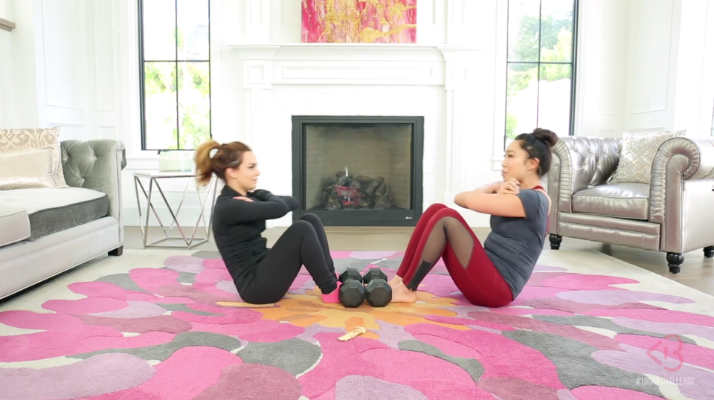

Optional Equipment

Sit-Up Muscles Worked
Primary
Abdominals (rectus abdominis)
Secondary
Obliques; Hip Flexor (iliopsoas)
Sit-Up Variations and Alternatives
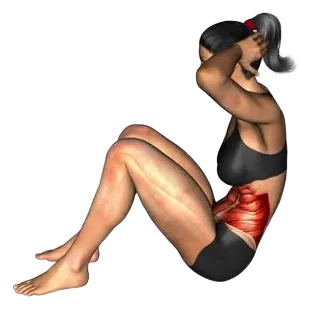


How to do the Sit-Up
Begin by lying on your back on a mat or comfortable surface. Bend your knees and place your feet flat on the ground about hip-width apart.
Cross your hands to opposite shoulders, or lightly touch your fingertips behind your ears. Avoid pulling on your neck.
Engage your core muscles and slowly lift your upper body up towards your knees, exhaling as you do so. Try to lift your chest rather than pulling your head with your hands.
Pause briefly at the top of the movement with your torso upright.
Slowly lower back down to the starting position while inhaling, controlling the movement with your core muscles.
Repeat for the desired number of repetitions and sets.
Make sure to perform the exercise in a controlled manner, focusing on using your abdominal muscles rather than momentum.
Note: It's important to avoid straining the neck during sit-ups. If you experience neck pain, re-evaluate your form, and consider performing other core exercises like planks that place less stress on the neck.
---
Sit-Up FAQs
What muscles does the Sit-Up work?
The Sit-Up mainly works the core. The main muscles are the rectus abdominis.
What equipment do you need for the Sit-Up?
None. The Sit-Up is a bodyweight exercise, so you can do it anywhere.
Is the Sit-Up a compound exercise?
Yes. It's a compound movement, meaning it trains several muscle groups at once rather than isolating one.
What are some Sit-Up variations and alternatives?
Similar exercises include the Three-Quarter Sit-Up, Ab Mat Sit-Up, Crossed Body Sit-Up Twist and Elbow to Knee Sit-Up.
Training calculators
Work out the numbers behind your training before your next session.