Kneeling Upper-Back Rotation Roll
Improve upper back mobility with Kneeling Upper-Back Rotation Roll. Stretch & relieve tension with this simple, effective exercise.
The Kneeling Upper-Back Rotation Roll mainly works the back, traps and shoulders. You'll need: foam roller.

Required Equipment

Kneeling Upper-Back Rotation Roll Muscles Worked
Primary
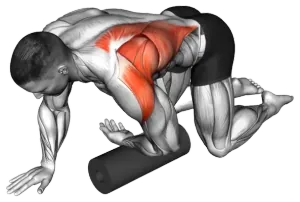
Mid Traps (trapezius, middle fibers); Lats (latissimus dorsi); Rear Shoulder (Delts) (posterior deltoid); Rhomboids (Shoulder Blade) (rhomboids, major & minor)
Kneeling Upper-Back Rotation Roll Variations and Alternatives


How to do the Kneeling Upper-Back Rotation Roll
Start by kneeling on the floor with your feet flat on the ground. Place a foam roller horizontal in front of you.
Lean forward and rest your forearms on the foam roller, with your palms facing down. Your hips should be above your knees, creating a table-top position with your back.
Engage your core to keep your spine neutral.
Without moving your hips or lower back, slowly rotate your upper back and shoulder to one side, bringing your elbow up towards the ceiling and following the movement with your gaze. The muscles highlighted in the image should be engaged during the rotation.
Hold the peak rotation position for 1-2 seconds to stretch the thoracic back muscles.
Slowly return to the starting position.
Repeat the movement on the other side.
Continue alternating sides for the recommended number of repetitions and sets.
---
Kneeling Upper-Back Rotation Roll FAQs
What muscles does the Kneeling Upper-Back Rotation Roll work?
The Kneeling Upper-Back Rotation Roll mainly works the back, traps and shoulders. The main muscles are the trapezius, latissimus dorsi, posterior deltoid and rhomboids.
What equipment do you need for the Kneeling Upper-Back Rotation Roll?
Foam roller.
What are some Kneeling Upper-Back Rotation Roll variations and alternatives?
Similar exercises include the Foam-Roll Serratu Wall Slide, Foam-Roll Hip Abductor, Foam-Roll Upper-Back and Kneeling Back Rotation Stretch.
Training calculators
Work out the numbers behind your training before your next session.