Quick-Feet
Boost your agility and speed with Quick-Feet! This fast-paced drill improves your footwork and cardio. Get ready to move!
The Quick-Feet mainly works the calves / shins, with help from the glutes & hips and quads. No equipment needed: it uses just your bodyweight.
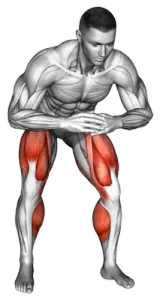

Quick-Feet Muscles Worked
Primary
Upper Calf (gastrocnemius)
Secondary
Glutes (gluteus maximus); Quads (quadriceps femoris)
Quick-Feet Variations and Alternatives


How to do the Quick-Feet
1. Start in a slightly squatted position with your feet shoulder-width apart, knees bent and arms in front of you for balance.
2. Begin the exercise by rapidly tapping your feet on the floor in a running motion. Keep your steps light and quick, as if you were running in place at a very high speed.
3. Maintain the slight squat position throughout the exercise, ensuring that your core is engaged and your back is straight without any hunching.
4. Continue the rapid foot tapping for the set duration, focusing on speed, agility, and maintaining the proper form.
5. After completing the set duration, stop and rest for a pre-determined time before starting the next set.
6. Aim to maintain consistent intensity throughout all sets.
Be sure to perform a proper warm-up before starting this high-intensity exercise and cool down afterward. Quick Feet is designed to improve agility, speed, and cardiovascular health, so it should be performed at a challenging but safe pace.
---
Quick-Feet FAQs
What muscles does the Quick-Feet work?
The Quick-Feet mainly works the calves / shins, with help from the glutes & hips and quads. The main muscles are the gastrocnemius.
What equipment do you need for the Quick-Feet?
None. The Quick-Feet is a bodyweight exercise, so you can do it anywhere.
What workout day should the Quick-Feet go on?
It belongs on leg day in a push/pull/legs routine.
What are some Quick-Feet variations and alternatives?
Similar exercises include the Cardio Quick-Feet, Back Cross-Over Foot-Tap, Open Foot Body Cross and Bodyweight Skipping.
Training calculators
Work out the numbers behind your training before your next session.