Pelvic Tilt
Strengthen your core & ease back pain! The Pelvic Tilt exercise improves posture and stability.
The Pelvic Tilt mainly works the core and lower back, with help from the glutes & hips. No equipment needed: it uses just your bodyweight.
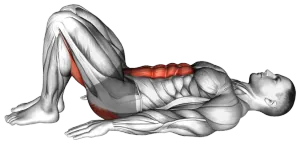

Pelvic Tilt Muscles Worked
Primary
Abdominals (rectus abdominis); Spinal Erectors (erector spinae)
Secondary
Glutes (gluteus maximus); Hip Flexor (iliopsoas)
Pelvic Tilt Variations and Alternatives


How to do the Pelvic Tilt
Starting Position: Lie on your back on a flat surface with knees bent and feet flat on the ground, arms by your sides.
Initiate Movement: Engage your core by drawing your belly button towards your spine.
Execute the Tilt: Slowly tilt your pelvis upward by contracting your abdominal muscles and flattening your lower back against the floor. During this movement, your buttocks will slightly rise, but make sure your glutes stay relaxed.
Isometric Hold: Hold the tilt for a few seconds, ensuring that the core muscles are engaged and the lower back remains in contact with the floor.
Return: Gently release the tilt and return to the starting position.
Repetition: Repeat the movement for the desired number of repetitions or duration.
Ensure you move in a controlled manner throughout the exercise and focus on the contraction of the abdominals and the movement of the pelvis. This exercise is often used for strengthening the core, improving posture, and alleviating lower back pain.
---
Pelvic Tilt FAQs
What muscles does the Pelvic Tilt work?
The Pelvic Tilt mainly works the core and lower back, with help from the glutes & hips. The main muscles are the rectus abdominis and erector spinae.
What equipment do you need for the Pelvic Tilt?
None. The Pelvic Tilt is a bodyweight exercise, so you can do it anywhere.
What are some Pelvic Tilt variations and alternatives?
Similar exercises include the Bottom-Up, Alternating Lying Shift Posterior Pelvic Hold, Lying Shift Anterior Pelvic Hold and Lying Pelvic Tilt.
Training calculators
Work out the numbers behind your training before your next session.