Floor Lying Slide
Improve shoulder mobility with Floor Lying Slides! Strengthen your back and improve posture with this simple, effective exercise.
The Floor Lying Slide mainly works the shoulders and back, with help from the traps. No equipment needed: it uses just your bodyweight.

Floor Lying Slide Muscles Worked
Primary
Rear Shoulder (Delts) (posterior deltoid); Lats (latissimus dorsi)
Secondary
Rhomboids (Shoulder Blade) (rhomboids, major & minor); Mid Traps (trapezius, middle fibers)
Floor Lying Slide Variations and Alternatives


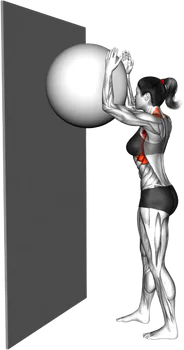


How to do the Floor Lying Slide
Lie on your back on a smooth surface with your knees bent and feet flat on the floor.
Extend your arms straight above your head, keeping them in contact with the floor.
Slide your arms down while keeping your wrists and elbows in contact with the floor, bending your elbows until they reach a 90-degree angle, or as close to it as comfortably possible. This phase activates the muscles highlighted in the image.
Slowly slide your arms back to the starting position, extending them overhead.
Focus on keeping your lower back in a neutral position, avoiding excessive arching, and engage your core to maintain stability.
Repeat the movement for the desired number of repetitions and sets.
Ensure smooth arm movements and avoid jerky motions. This exercise helps improve shoulder mobility and strength, particularly in the posterior shoulder region.
---
Floor Lying Slide FAQs
What muscles does the Floor Lying Slide work?
The Floor Lying Slide mainly works the shoulders and back, with help from the traps. The main muscles are the posterior deltoid and latissimus dorsi.
What equipment do you need for the Floor Lying Slide?
None. The Floor Lying Slide is a bodyweight exercise, so you can do it anywhere.
What workout day should the Floor Lying Slide go on?
It belongs on push day in a push/pull/legs routine.
What are some Floor Lying Slide variations and alternatives?
Similar exercises include the Floor Lying Around-The-World, Body Slide, Exercise Ball Serratu Wall Slide and Lying Arm Abduction.
Training calculators
Work out the numbers behind your training before your next session.