Lateral Squat to Overhead Press
The Lateral Squat to Overhead Press is a compound exercise that mainly works the hip abductors (outer thighs), quads and shoulders, with help from the glutes & hips and triceps. No equipment needed: it uses just your bodyweight.
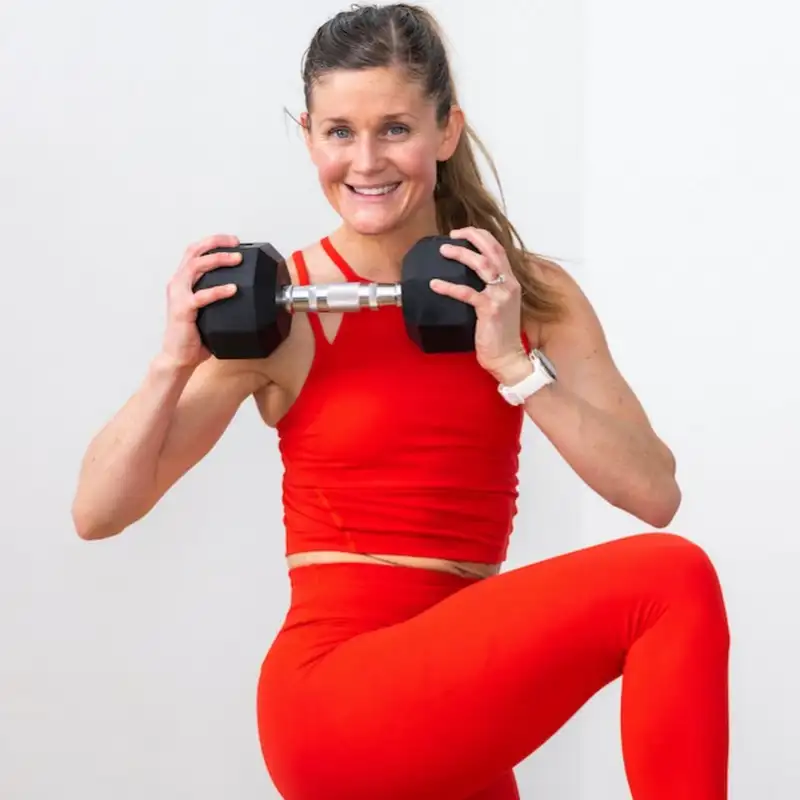

Optional Equipment

Lateral Squat to Overhead Press Muscles Worked
Primary
Hip Abductor (gluteus medius); Quads (quadriceps femoris); Front Shoulder (anterior deltoid)
Secondary
Glutes (gluteus maximus); Triceps (triceps brachii)
How to do the Lateral Squat to Overhead Press
Setup
Place a resistance band around your thighs, just above the knees.
Stand with feet together, holding a pair of dumbbells at shoulder height with your elbows bent and palms facing forward.
Movement
Step and Squat: Step one foot out to the side into a wide stance and lower your hips down and back into a squat position, keeping your knees pushed out against the band.
Transition: As you rise from the squat, step your feet back together.
Press: From the standing position with your feet together, press the dumbbells straight up overhead until your arms are fully extended.
Repeat: Lower the dumbbells back to shoulder height and step out to the opposite side to repeat the movement.
Lateral Squat to Overhead Press FAQs
What muscles does the Lateral Squat to Overhead Press work?
The Lateral Squat to Overhead Press mainly works the hip abductors (outer thighs), quads and shoulders, with help from the glutes & hips and triceps. The main muscles are the gluteus medius, quadriceps femoris and anterior deltoid.
What equipment do you need for the Lateral Squat to Overhead Press?
None. The Lateral Squat to Overhead Press is a bodyweight exercise, so you can do it anywhere.
Is the Lateral Squat to Overhead Press a compound exercise?
Yes. It's a compound movement, meaning it trains several muscle groups at once rather than isolating one.
Training calculators
Work out the numbers behind your training before your next session.