Lateral Hop
UpdatedAgility & balance challenge! Hop side-to-side, landing softly. Great for coordination and lower body strength. Let's jump to it!
The Lateral Hop mainly works the quads and hip abductors (outer thighs), with help from the hamstrings and calves / shins. No equipment needed: it uses just your bodyweight.
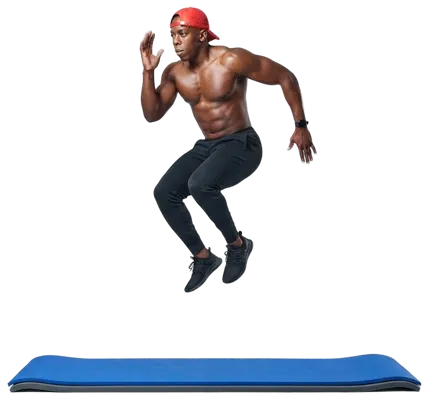

Lateral Hop Muscles Worked
Primary
Quads (quadriceps femoris); Hip Abductor (gluteus medius)
Secondary
Hamstrings; Lower Calf (soleus)
Lateral Hop Variations and Alternatives


How to do the Lateral Hop
Start by standing on your feet shoulder-width apart, with your knees slightly bent and your core engaged.
Begin the exercise by hopping to the right side, landing softly on the balls of your feet while maintaining balance.
Keep your knees bent as you land to absorb the impact and to prepare for the next hop.
Immediately push off from your right foot and hop to the left side, again landing on the balls of your feet.
Continue to hop from side to side for the desired number of repetitions or duration, keeping the movement quick and light.
Ensure you maintain a steady rhythm and use your arms to help balance and propel your body from side to side.
Concentrate on landing as quietly as possible to minimize impact and increase control throughout the exercise.
---
Lateral Hop FAQs
What muscles does the Lateral Hop work?
The Lateral Hop mainly works the quads and hip abductors (outer thighs), with help from the hamstrings and calves / shins. The main muscles are the quadriceps femoris and gluteus medius.
What equipment do you need for the Lateral Hop?
None. The Lateral Hop is a bodyweight exercise, so you can do it anywhere.
What workout day should the Lateral Hop go on?
It belongs on leg day in a push/pull/legs routine.
What are some Lateral Hop variations and alternatives?
Similar exercises include the Standing 3-Point Hop, Single Lateral Foot 4-Cone Hop, Single-Leg 4-Way Hop and Alternating Foot Hopscotch.
Training calculators
Work out the numbers behind your training before your next session.