Kettlebell Single-Arm Snatch
UpdatedExplosive full-body workout! Master the Kettlebell Single-Arm Snatch for strength, power, and coordination.
The Kettlebell Single-Arm Snatch is a compound exercise that mainly works the glutes & hips and back, with help from the biceps and core. You'll need: kettlebells.
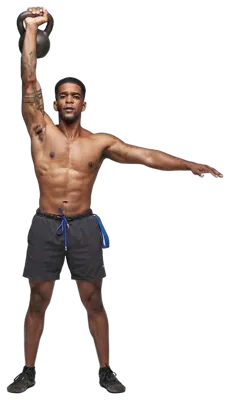

Required Equipment

Kettlebell Single-Arm Snatch Muscles Worked
Primary
Glutes (gluteus maximus); Lats (latissimus dorsi)
Secondary
Biceps (biceps brachii); Abdominals (rectus abdominis)
Kettlebell Single-Arm Snatch Variations and Alternatives
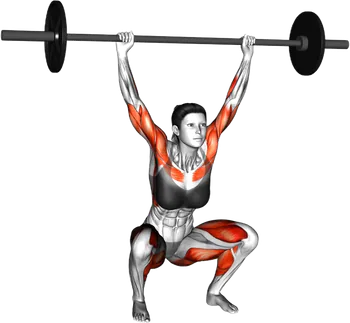
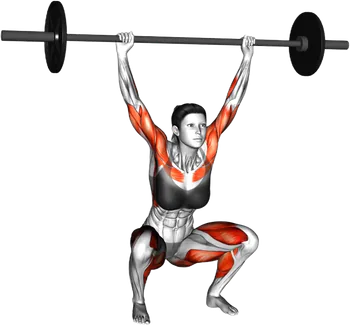


How to do the Kettlebell Single-Arm Snatch
Stand with your feet slightly wider than shoulder-width apart and place a kettlebell on the floor between your feet.
Hinge at your hips and bend your knees to grip the kettlebell handle with one hand, keeping your chest up and back flat.
Drive your hips forward powerfully to swing the kettlebell upward, keeping it close to your body.
As the kettlebell reaches chest height, punch your hand upward and slide your wrist under the handle to lock it overhead.
Lower the kettlebell back down in a controlled arc, hinging your hips as it passes to absorb the momentum before the next repetition.
Kettlebell Single-Arm Snatch FAQs
What muscles does the Kettlebell Single-Arm Snatch work?
The Kettlebell Single-Arm Snatch mainly works the glutes & hips and back, with help from the biceps and core. The main muscles are the gluteus maximus and latissimus dorsi.
What equipment do you need for the Kettlebell Single-Arm Snatch?
Kettlebells.
Is the Kettlebell Single-Arm Snatch a compound exercise?
Yes. It's a compound movement, meaning it trains several muscle groups at once rather than isolating one.
What workout day should the Kettlebell Single-Arm Snatch go on?
It belongs on pull day in a push/pull/legs routine.
What are some Kettlebell Single-Arm Snatch variations and alternatives?
Similar exercises include the Hang & Snatch, Barbell Hang Snatch Below-Knee, Barbell Snatch and Barbell Snatch Balance.
Training calculators
Work out the numbers behind your training before your next session.