Isometric Hold Push-Up
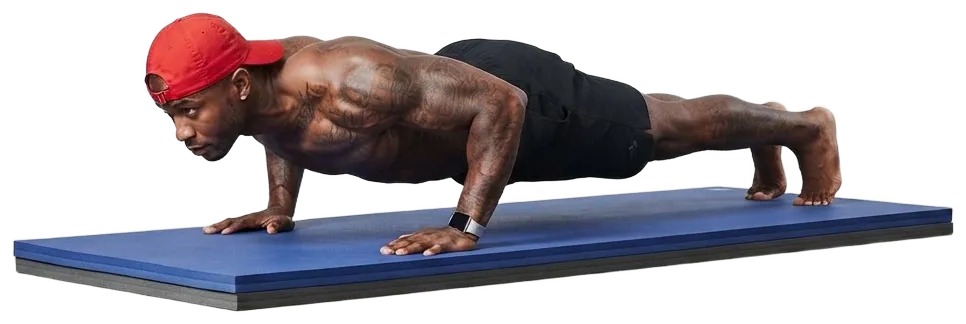
UpdatedBuild strength with the Isometric Hold Push-Up! Hold the push-up halfway for major muscle engagement. Modify on your knees if needed!
The Isometric Hold Push-Up is a compound exercise that mainly works the chest and triceps, with help from the core. No equipment needed: it uses just your bodyweight.

Isometric Hold Push-Up Muscles Worked
Primary
Upper Chest (pectoralis major, clavicular head); Triceps (triceps brachii)
Secondary
Abdominals (rectus abdominis); Obliques
Isometric Hold Push-Up Variations and Alternatives


How to do the Isometric Hold Push-Up
Isometric Hold Push-Up
Positioning:
Start in a standard push-up position. Place your hands shoulder-width apart on the floor, directly beneath your shoulders.
Your feet should be together, with your toes touching the ground. Keep your legs straight and your body in a straight line from head to heels.
Engage your core muscles by pulling your belly button towards your spine.
Movement:
Lower your body towards the ground as you would in a regular push-up, keeping your elbows close to your sides.
Stop halfway down, so your elbows are at about a 90-degree angle. Ensure your back remains straight and your hips are not sagging or lifting.
Hold this position, maintaining tension in your chest, arms, and core for a specified duration (e.g., 20-30 seconds).
To finish, push through your palms to return to the starting position.
Tips:
Keep your neck neutral by looking slightly ahead, not at the floor.
Breath steadily throughout the hold. Inhale and exhale deeply to maintain an engaged core.
If you're struggling to hold the position, you can modify by dropping your knees to the ground while keeping your upper body in the same alignment.
Repetitions: Aim for 3 sets of holding for 20-30 seconds each. Adjust the hold time according to your strength level.
Isometric Hold Push-Up FAQs
What muscles does the Isometric Hold Push-Up work?
The Isometric Hold Push-Up mainly works the chest and triceps, with help from the core. The main muscles are the pectoralis major and triceps brachii.
What equipment do you need for the Isometric Hold Push-Up?
None. The Isometric Hold Push-Up is a bodyweight exercise, so you can do it anywhere.
Is the Isometric Hold Push-Up a compound exercise?
Yes. It's a compound movement, meaning it trains several muscle groups at once rather than isolating one.
What workout day should the Isometric Hold Push-Up go on?
It belongs on push day in a push/pull/legs routine.
What are some Isometric Hold Push-Up variations and alternatives?
Similar exercises include the Clock Push-Up, Deep Push-Up Hold, Fist Push-Up and Half Push-Up Max Rep.
Training calculators
Work out the numbers behind your training before your next session.