Full Planche
Defy gravity! The Full Planche requires incredible strength & balance. This advanced calisthenic feat takes dedication. Are you up for the challenge?
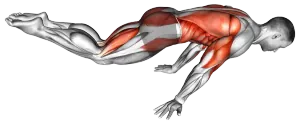
The Full Planche mainly works the chest and shoulders, with help from the core and triceps. No equipment needed: it uses just your bodyweight.

Full Planche Muscles Worked
Primary
Upper Chest (pectoralis major, clavicular head); Front Shoulder (anterior deltoid)
Secondary
Abdominals (rectus abdominis); Triceps (triceps brachii)
Full Planche Variations and Alternatives



How to do the Full Planche
Start in a push-up position on the floor with your hands slightly wider than shoulder-width apart.
Lean forward and transfer your weight onto your hands, keeping your body straight and core engaged.
Gradually shift your feet off the ground by leaning further forward and lifting your body until it is parallel to the ground. Your legs should be straight and together.
Keep your arms straight, close to your body, with your hands turned out slightly for balance.
Hold this position, maintaining a straight line from head to heels. Keep your hips lifted to avoid sagging and engage your core to stabilize your body.
Breathe steadily as you hold the planche position for the target duration.
Carefully lower yourself back to the starting position or drop your feet to the ground to exit the planche.
Tips: This is a highly advanced exercise that requires significant strength, balance, and control. It is usually achieved after extensive training including progressive exercises like planche leans, frog stands, and band-assisted planches. Always warm up your wrists and shoulders thoroughly to prepare for the strain of the exercise. Focus on gradually improving your balance and strength over time rather than rushing to achieve the full planche. Consistency and patience are key, as it can take months or even years to achieve a full planche for some individuals.
---
Full Planche FAQs
What muscles does the Full Planche work?
The Full Planche mainly works the chest and shoulders, with help from the core and triceps. The main muscles are the pectoralis major and anterior deltoid.
What equipment do you need for the Full Planche?
None. The Full Planche is a bodyweight exercise, so you can do it anywhere.
What workout day should the Full Planche go on?
It belongs on push day in a push/pull/legs routine.
What are some Full Planche variations and alternatives?
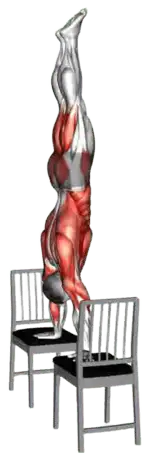
Similar exercises include the Froggy Planche, Full Planche Push-Up, Handstand Hold and Handstand Walk.
Training calculators
Work out the numbers behind your training before your next session.