Dumbbell Snatch Switch Squat Pulse
The Dumbbell Snatch Switch Squat Pulse is a compound exercise that mainly works the glutes & hips, quads and shoulders, with help from the lower back and hamstrings. You'll need: dumbbells.
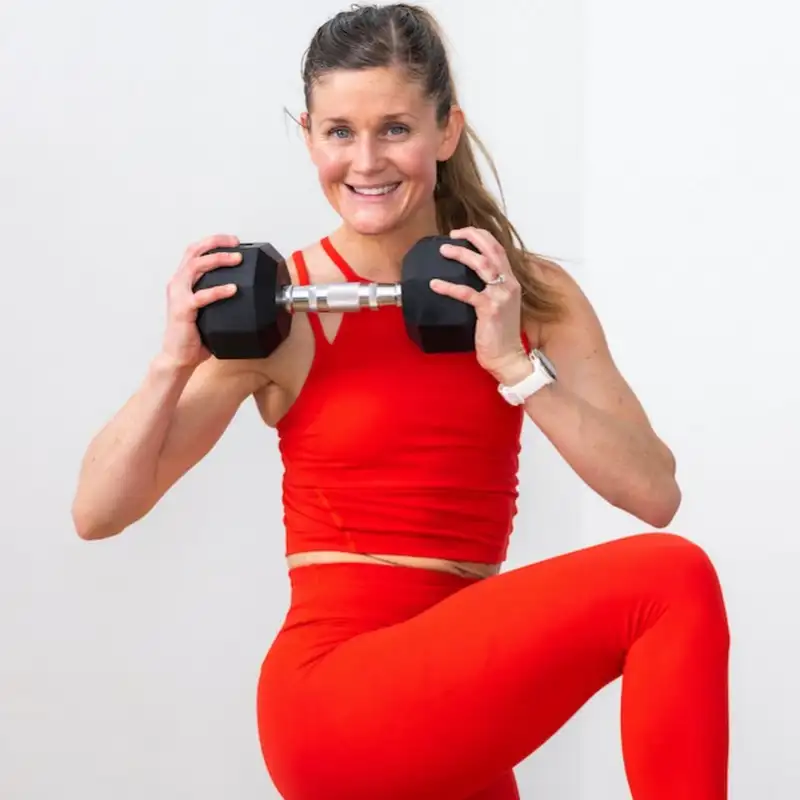

Required Equipment

Dumbbell Snatch Switch Squat Pulse Muscles Worked
Primary
Glutes (gluteus maximus); Quads (quadriceps femoris); Front Shoulder (anterior deltoid)
Secondary
Spinal Erectors (erector spinae); Hamstrings
How to do the Dumbbell Snatch Switch Squat Pulse
Setup
Stand with feet slightly wider than shoulder-width apart.
Hold a single dumbbell in one hand, letting it hang between your legs, while keeping your chest upright and core engaged.
Movement
Primary Phase: Lower your hips into a squat position while bringing the dumbbell towards the floor between your legs.
Transition: Immediately drive through your heels to extend your hips and knees explosively, using this momentum to pull the dumbbell upward along your body.
Finish: As the weight reaches shoulder height, punch it directly overhead, fully extending your arm, while simultaneously settling into a shallow pulse at the bottom or top of the movement depending on the specific flow.
Return: Carefully lower the dumbbell back to the starting position at your shoulder, then down between your legs.
Switch arms in the next repetition or alternate according to your specific program requirements.
Dumbbell Snatch Switch Squat Pulse FAQs
What muscles does the Dumbbell Snatch Switch Squat Pulse work?
The Dumbbell Snatch Switch Squat Pulse mainly works the glutes & hips, quads and shoulders, with help from the lower back and hamstrings. The main muscles are the gluteus maximus, quadriceps femoris and anterior deltoid.
What equipment do you need for the Dumbbell Snatch Switch Squat Pulse?
Dumbbells.
Is the Dumbbell Snatch Switch Squat Pulse a compound exercise?
Yes. It's a compound movement, meaning it trains several muscle groups at once rather than isolating one.
Training calculators
Work out the numbers behind your training before your next session.