Dumbbell Single-Arm Split Elevated Foot Rear Press Lunge
The Dumbbell Single-Arm Split Elevated Foot Rear Press Lunge is a compound exercise that mainly works the quads, glutes & hips and shoulders, with help from the core. You'll need: box and dumbbells.
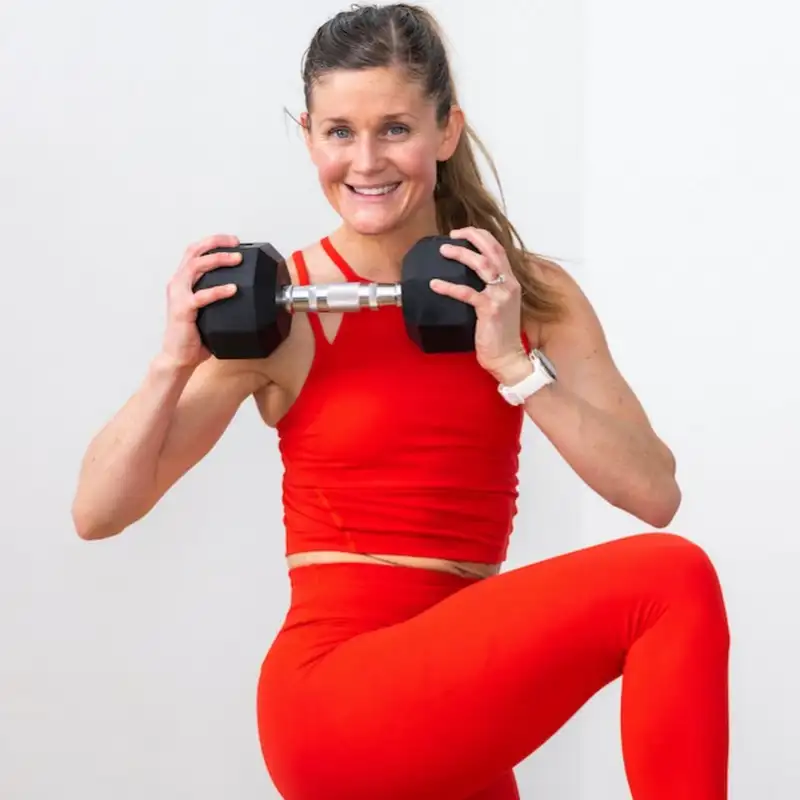

Required Equipment


Dumbbell Single-Arm Split Elevated Foot Rear Press Lunge Muscles Worked
Primary
Quads (quadriceps femoris); Glutes (gluteus maximus); Front Shoulder (anterior deltoid)
Secondary
Obliques
How to do the Dumbbell Single-Arm Split Elevated Foot Rear Press Lunge
Setup
Place your rear foot on an elevated surface like a bench or box behind you. Hold a single dumbbell in the hand opposite to the front leg (or same side for a challenge) at shoulder height in a rack position.
Movement
The Squat: Inhale and lower your hips toward the floor by bending the front knee. Ensure the front knee stays aligned with your ankle and does not collapse inward.
The Drive: As you push through your front heel to return to the starting position, drive the dumbbell straight up overhead by extending your arm.
Return: Control the descent of the weight back to the rack position as you initiate the next rep.
Dumbbell Single-Arm Split Elevated Foot Rear Press Lunge FAQs
What muscles does the Dumbbell Single-Arm Split Elevated Foot Rear Press Lunge work?
The Dumbbell Single-Arm Split Elevated Foot Rear Press Lunge mainly works the quads, glutes & hips and shoulders, with help from the core. The main muscles are the quadriceps femoris, gluteus maximus and anterior deltoid.
What equipment do you need for the Dumbbell Single-Arm Split Elevated Foot Rear Press Lunge?
Box and dumbbells.
Is the Dumbbell Single-Arm Split Elevated Foot Rear Press Lunge a compound exercise?
Yes. It's a compound movement, meaning it trains several muscle groups at once rather than isolating one.
What workout day should the Dumbbell Single-Arm Split Elevated Foot Rear Press Lunge go on?
It belongs on leg day in a push/pull/legs routine.
Training calculators
Work out the numbers behind your training before your next session.