Dumbbell Single-Arm Shrug
Build bigger traps with Dumbbell Single-Arm Shrugs! Isolate each side for a superior shrug and balanced strength.
The Dumbbell Single-Arm Shrug mainly works the traps, with help from the forearms. You'll need: dumbbells.
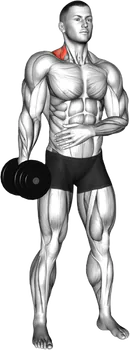

Required Equipment

Dumbbell Single-Arm Shrug Muscles Worked
Primary
Upper Traps (trapezius, upper fibers)
Secondary
Inner Forearm (wrist flexors)
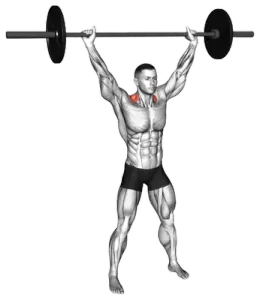
Dumbbell Single-Arm Shrug Variations and Alternatives



How to do the Dumbbell Single-Arm Shrug
Stand up straight with your feet shoulder-width apart.
Hold a dumbbell in one hand with your arm extended down your side. Your palm should face your body.
Keep your back straight, shoulders relaxed, and gaze forward.
Without bending your elbow, exhale as you elevate your shoulder as high as possible, essentially "shrugging" the weight upward.
Pause at the top of the motion, focusing on contracting your trapezius muscle.
Inhale as you slowly lower your shoulder back to the starting position.
Perform the desired number of reps on one side before switching to the other arm.
Ensure that the movement is controlled and focused, with no jerking or swinging of the dumbbell.
Aim for even sets on both sides to maintain muscular balance.
Be sure to use a dumbbell weight that allows you to execute the exercise with proper form while still challenging your muscles. It's important to avoid rotating or twisting your body while performing the exercise to maintain proper alignment and prevent injury.
---
Dumbbell Single-Arm Shrug FAQs
What muscles does the Dumbbell Single-Arm Shrug work?
The Dumbbell Single-Arm Shrug mainly works the traps, with help from the forearms. The main muscles are the trapezius.
What equipment do you need for the Dumbbell Single-Arm Shrug?
Dumbbells.
What workout day should the Dumbbell Single-Arm Shrug go on?
It belongs on pull day in a push/pull/legs routine.
What are some Dumbbell Single-Arm Shrug variations and alternatives?
Similar exercises include the Band Shrug, Barbell Overhead Shrug, Barbell Seated Shrug and Barbell Shrug.
Training calculators
Work out the numbers behind your training before your next session.