Dumbbell Lying 30-Degree Shrug
Target upper traps with this dumbbell shrug variation. Build a thicker, stronger neck and improve posture.
The Dumbbell Lying 30-Degree Shrug mainly works the traps, with help from the shoulders. You'll need: dumbbells or incline bench.



Required Equipment


Dumbbell Lying 30-Degree Shrug Muscles Worked
Primary
Upper Traps (trapezius, upper fibers)
Secondary
Front Shoulder (anterior deltoid); Side Shoulder (lateral deltoid)
Dumbbell Lying 30-Degree Shrug Variations and Alternatives


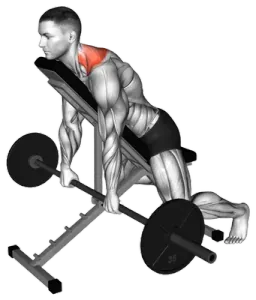


How to do the Dumbbell Lying 30-Degree Shrug
Set an incline bench to a 30-45 degree angle.
Sit on the bench facing forward, and hold a dumbbell in each hand with a neutral grip (palms facing each other), letting the weights hang down on either side of the bench.
Keep your arms straight and feet planted firmly on the floor for stability.
Shrug your shoulders straight up towards your ears while keeping your arms extended. Ensure the movement is controlled and focus on using your traps.
Hold the contraction at the top for a moment, then slowly lower your shoulders back to the starting position.
Perform the desired number of repetitions, ensuring you maintain good form throughout the set.
Remember, it's important to select a weight that allows you to perform the exercise with proper form and control. Avoid using momentum to lift the weights, and keep the motion smooth.
---
Dumbbell Lying 30-Degree Shrug FAQs
What muscles does the Dumbbell Lying 30-Degree Shrug work?
The Dumbbell Lying 30-Degree Shrug mainly works the traps, with help from the shoulders. The main muscles are the trapezius.
What equipment do you need for the Dumbbell Lying 30-Degree Shrug?
Dumbbells or incline bench.
What workout day should the Dumbbell Lying 30-Degree Shrug go on?
It belongs on pull day in a push/pull/legs routine.
What are some Dumbbell Lying 30-Degree Shrug variations and alternatives?
Similar exercises include the Band Shrug, Barbell Behind-Back Shrug, Barbell Decline Shrug and Barbell Overhead Shrug.
Training calculators
Work out the numbers behind your training before your next session.