Dumbbell Glute Bridge Pullover March
The Dumbbell Glute Bridge Pullover March mainly works the glutes & hips and back, with help from the core and hamstrings. No equipment needed: it uses just your bodyweight.
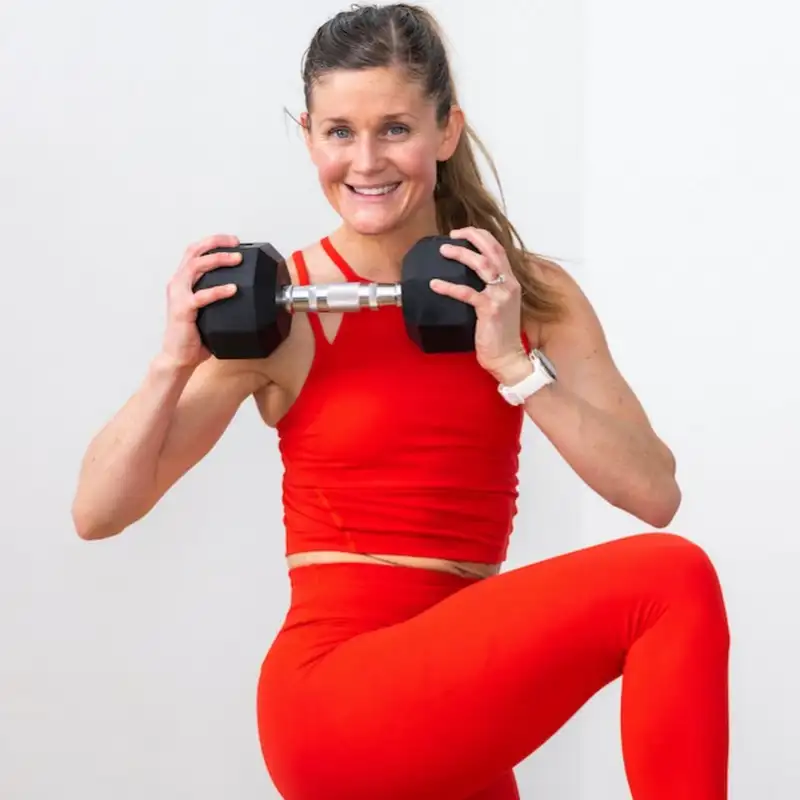

Optional Equipment


Dumbbell Glute Bridge Pullover March Muscles Worked
Primary
Glutes (gluteus maximus); Lats (latissimus dorsi)
Secondary
Abdominals (rectus abdominis); Hamstrings
How to do the Dumbbell Glute Bridge Pullover March
Setup
Lie on your back on the floor, knees bent with feet flat on the ground.
Hold a dumbbell with both hands, extending your arms straight toward the ceiling above your chest.
Engage your core and lift your hips into a glute bridge position, creating a straight line from your knees to your shoulders.
Movement
Simultaneous Action: While holding the bridge, lower the dumbbell behind your head by hinging only at the shoulders, keeping arms relatively straight.
Marching: As you lower the weight, lift one foot off the ground, bringing your knee toward your chest in a marching motion.
Return: Bring the dumbbell back above your chest and return your foot to the floor simultaneously.
Alternation: Repeat the movement, alternating the lifting leg with each repetition of the pullover.
Form Tips
Keep your hips elevated and stable throughout the entire movement; do not let them sag.
Ensure your lower back remains neutral and connected to the work; do not arch your back excessively.
Dumbbell Glute Bridge Pullover March FAQs
What muscles does the Dumbbell Glute Bridge Pullover March work?
The Dumbbell Glute Bridge Pullover March mainly works the glutes & hips and back, with help from the core and hamstrings. The main muscles are the gluteus maximus and latissimus dorsi.
What equipment do you need for the Dumbbell Glute Bridge Pullover March?
None. The Dumbbell Glute Bridge Pullover March is a bodyweight exercise, so you can do it anywhere.
What workout day should the Dumbbell Glute Bridge Pullover March go on?
It belongs on leg day in a push/pull/legs routine.
Training calculators
Work out the numbers behind your training before your next session.