Against-Wall Crunch
Strengthen your core with Against-Wall Crunches! A simple yet effective exercise for defined abs.
The Against-Wall Crunch mainly works the core. No equipment needed: it uses just your bodyweight.

Against-Wall Crunch Muscles Worked
Primary
Abdominals (rectus abdominis)
Against-Wall Crunch Variations and Alternatives
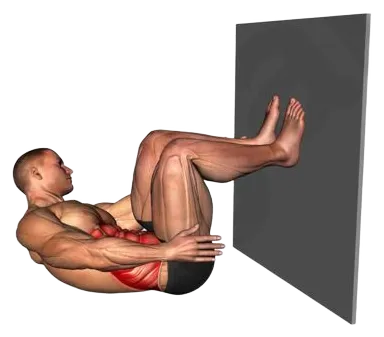


How to do the Against-Wall Crunch
Begin by lying on your back on the floor with your legs up and your heels placed against a wall. Your legs should be straight and form a 90-degree angle with your torso.
Place your hands lightly behind your head or gently touching the sides of your head, taking care not to pull on your neck during the exercise.
Engage your core muscles and lift your upper body towards your feet while keeping your lower back pressed to the floor. Focus on using your abdominal muscles to perform the lift rather than your hips or neck.
Lift until your shoulder blades are off the ground, hold for a count, then slowly lower your torso back to the starting position.
Repeat the movement for the desired number of reps and sets.
Tips: Keep the movement controlled and avoid using momentum to perform the crunch. Ensure you are breathing properly, exhaling as you crunch up and inhaling as you lower back down. To prevent straining your neck, imagine holding an orange under your chin, keeping some space there throughout the exercise.
---
Against-Wall Crunch FAQs
What muscles does the Against-Wall Crunch work?
The Against-Wall Crunch mainly works the core. The main muscles are the rectus abdominis.
What equipment do you need for the Against-Wall Crunch?
None. The Against-Wall Crunch is a bodyweight exercise, so you can do it anywhere.
What are some Against-Wall Crunch variations and alternatives?
Similar exercises include the Against-Wall 90-Degree Heel-Tap, Alternating Against-Wall Knee Cross-Over Sit, Against-Wall Close-Grip Push-Up and Against-Wall Cross Mountain-Climber.
Training calculators
Work out the numbers behind your training before your next session.